What Is The Penguin Capital Of The World?
Five breeding penguin species, colonies that rival the human population, and one honest look at whether the Falkland Islands earn the penguin capital title.
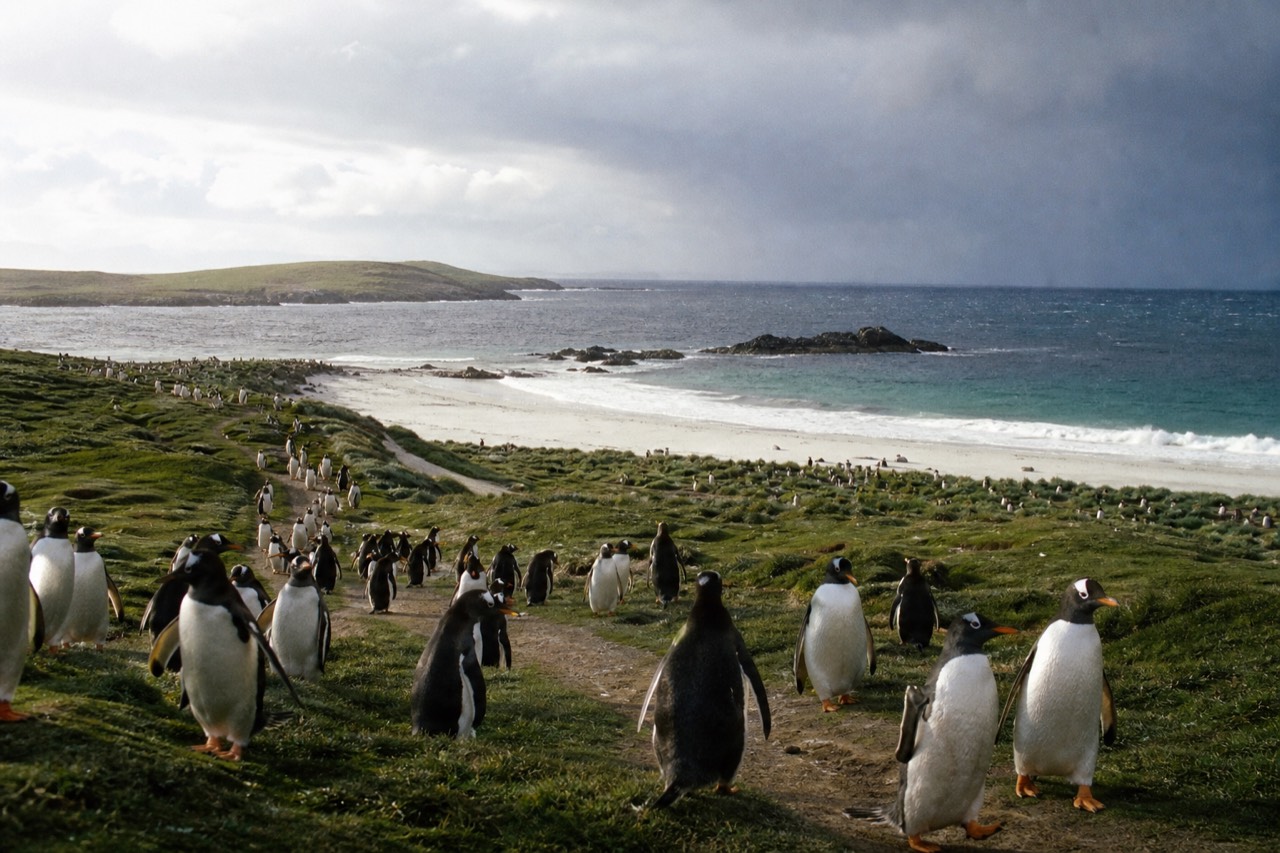
The phrase gets thrown at half the Southern Hemisphere. Brochures hand it to Antarctica, to South Africa's Cape coast, to a beach in Argentina, and to a wind-scoured archipelago in the South Atlantic where the birds genuinely do outnumber the residents on some beaches. No committee awards the title, so the honest approach is to test the claim rather than repeat it.
Price comparisons are editorial snapshots from August 2026, except where updated. Final prices, reviews and booking terms can change; use your date and full party size on the provider’s page.
What Is The Penguin Capital Of The World?
No official body awards the title, but the Falkland Islands hold the strongest working claim. Five penguin species breed across the archipelago, the colonies are large and reachable by road, and a population of roughly 3,465 people shares the islands with king penguin numbers that run to thousands at a single beach.
The claim rests on three things at once: species variety, colony size, and access. Plenty of places have one or two. Very few have all three, and none of the rivals combine them with a scheduled commercial flight, a working port and colonies inside a day trip of the capital. That last part turns a wildlife statistic into something you can stand in front of.
Which Penguins Breed In The Falkland Islands?
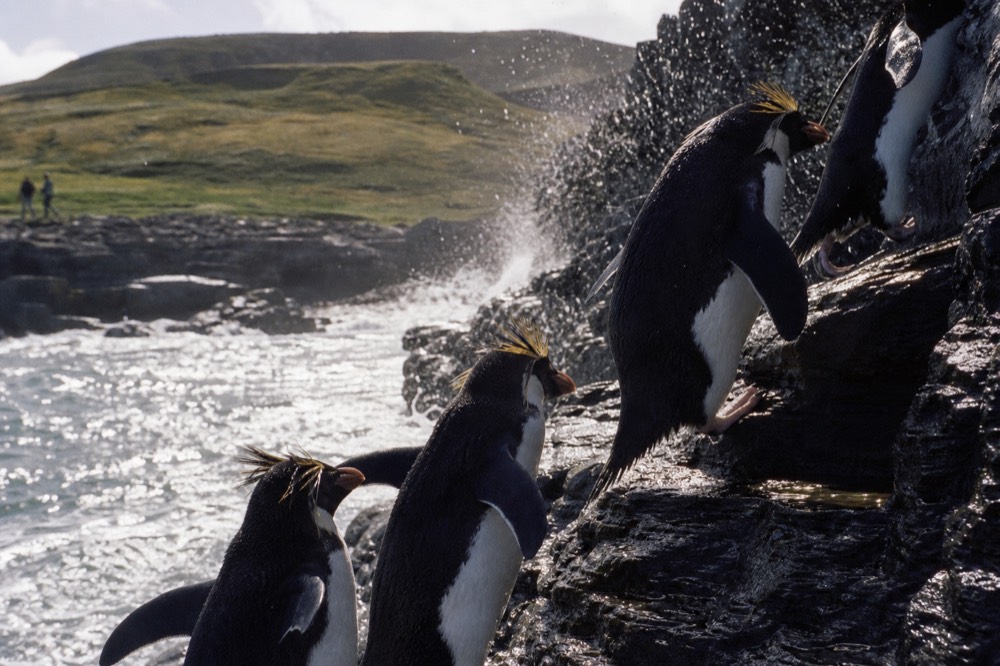
Five species: king, gentoo, southern rockhopper, Magellanic and macaroni. Day tours are built around the first three plus Magellanics, since those colonies sit within reach of Stanley. Kings are the headline at Volunteer Point, gentoos are the birds you will see closest to town, and rockhoppers hold the cliff sites.
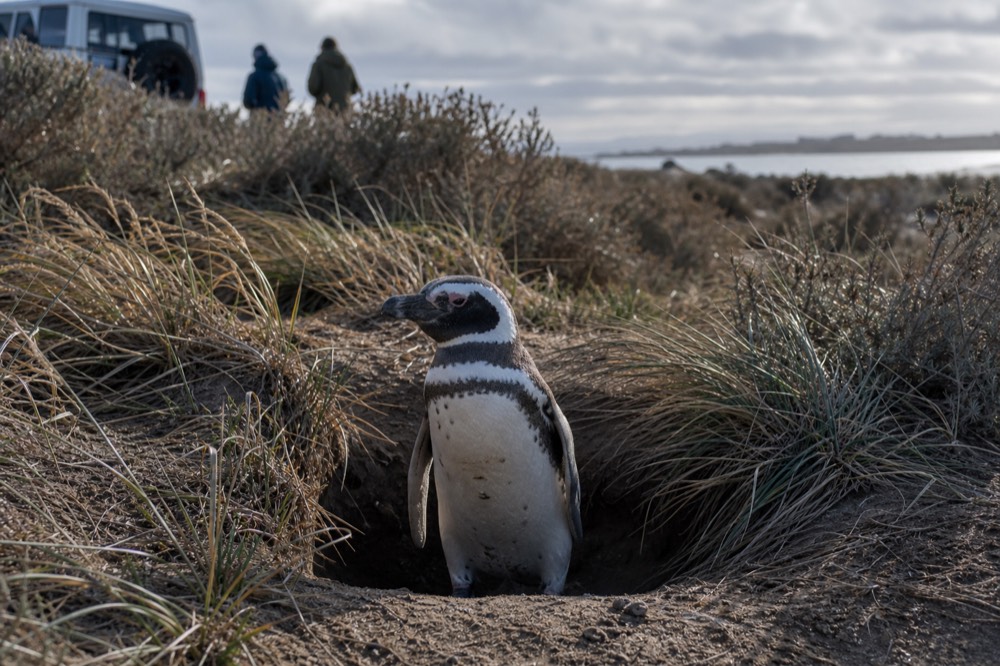
Each species behaves differently enough that seeing several in a day feels like visiting several places. Gentoos nest on open turf and commute in noisy processions to the surf. Magellanics dig burrows and appear at the entrance rather than in a crowd. Rockhoppers climb, which is as absurd to watch as it sounds. Kings just stand, upright and unhurried, in a mass that barely moves.
Do Penguins Really Outnumber People?
At one site, comfortably. Volunteer Point alone holds roughly 1,000 to 2,000 breeding pairs of king penguins, which is 2,000 to 4,000 adult birds before a single chick is counted, against a resident human population of about 3,465 across the entire archipelago. One beach, one species, and the arithmetic already works.
Being straight about the limits matters here. No current island-wide penguin census total is published, so the ratio across all five species is not a number anyone can quote honestly. Falklands Conservation runs island-wide censuses of gentoo and southern rockhopper on a ten-year cycle, and the most recent published totals predate 2025. The seabird picture around them is documented: the islands hold roughly 70% of the world's breeding black-browed albatross, about 500,000 pairs, and Sea Lion Island carries up to around 1,800 southern elephant seals with roughly 200 pups a year.
| The claim | What backs it | Where it gets shaky |
|---|---|---|
| Five penguin species breed here | King, gentoo, southern rockhopper, Magellanic and macaroni all breed in the islands | Day tours realistically deliver kings, gentoos and Magellanics |
| Penguins outnumber people | One king colony alone holds 1,000-2,000 breeding pairs against 3,465 residents | No current island-wide census total is published for all species |
| The world's biggest colonies | Not established: the verified global share here is 70% of breeding black-browed albatross | Sub-Antarctic rivals also hold very large penguin colonies |
| The easiest big colonies to reach | Weekly commercial flight, plus about 72,500 cruise passengers forecast for 2025-26 | Access can pause: sites close at short notice during avian flu detections |
| Colonies close to a capital city | A gentoo colony is a one-hour round trip from Stanley, from $40 per person | Kings need a full day, 6 hours 20 minutes from $398 per person |
How Do The Rival Claimants Compare?
South Georgia and the Antarctic Peninsula hold colonies at a scale the Falklands cannot match, but neither has an airstrip, a hotel or a road. South Georgia is permit-only by expedition ship, with a £250 per person entry permit from 1 July 2026. Mainland colonies elsewhere are easier to reach but built around one species.
That is the trade every penguin destination makes. Go further south for scale and you buy a multi-week voyage; the practical detail sits in the answer on visiting South Georgia. Stay closer to a road and you usually drop to one species. The Falklands sit in the middle of that curve, which is the real argument for the title. Volunteer Point is the clearest example: the largest king colony in the islands, reached by 4x4 from the Stanley jetty in about two hours each way, capped at four passengers per vehicle, on a day that runs 6 hours 20 minutes from $398 per person with a 4.8 rating across 223 reviews. Read the full king penguin day first, then check dates and the live price for your call date.
Where Do You See The Most Penguins In The Least Time?
A one-hour gentoo colony run from Stanley, from $40 per person, is the cheapest penguin sighting in the islands and the only one that fits any tender window. Groups are capped at 12. For more species in one trip, Bertha's Beach with Rookery Bay and Gypsy Cove runs 4 to 5 hours from $234 per person.
The gentoo express exists for passengers whose ship gives them a narrow slot, and it removes the usual excuse that there was no time ashore. With longer, the small-group Bertha's Beach trip includes lunch, snacks, drinks and entry fees, with pickup at the Tourist Board office or the cruise jetty, which makes it better value once you count what is bundled in. A side-by-side look at every penguin tour covers which sites hold which species, and what month is best to see penguins handles the breeding calendar.
Colony access is not guaranteed on any given day, so check the specific rerouting and cancellation terms, and the government publishes avian influenza updates as detections happen. These three run at different lengths, wildlife beyond the penguin colonies is worth adding on a full day, and everything that fits a port day sits in one place.
Questions People Ask About Penguin Numbers
What is the penguin capital of the world?
No official body awards the title, but the Falkland Islands have the strongest claim: five breeding species, large colonies, and access by scheduled flight or cruise ship. Volunteer Point alone holds roughly 1,000 to 2,000 breeding pairs of king penguins, against a total human population of about 3,465 across the archipelago.
How many penguin species live in the Falkland Islands?
Five species breed here: king, gentoo, southern rockhopper, Magellanic and macaroni. Kings concentrate at Volunteer Point, gentoos nest at several sites within reach of Stanley, Magellanics burrow in coastal sand near Gypsy Cove, and rockhoppers hold the cliff colonies. Most day tours deliver three of the five.
Where is the biggest king penguin colony in the Falkland Islands?
Volunteer Point, on East Falkland. Recent estimates put it at roughly 1,000 to 2,000 breeding pairs, and it is reached by 4x4 from Stanley in about two hours each way, with the final stretch off-road across open camp. The full tour runs 6 hours 20 minutes and starts from $398 per person.
Do penguins outnumber people in the Falkland Islands?
On the evidence available, yes. The resident population is around 3,465, while one king colony at Volunteer Point holds roughly 1,000 to 2,000 breeding pairs, meaning 2,000 to 4,000 adult birds before chicks. No current island-wide census covering all five species is published, so a precise archipelago-wide ratio does not exist.
Can bird flu close penguin colonies to visitors?
Yes, temporarily. Highly pathogenic avian influenza was confirmed in gentoo penguins on 28 August 2025, and dead penguins at Sparrow Cove swabbed positive that 19 November. Sites can close at short notice, and operators normally reroute to an unaffected colony rather than cancel the day.
Your Next Step
Choose Your Falklands Outing
Initial suggestion; use the optional controls to compare your plans.
Match The Outing To Your Plans
These controls compare the listed itineraries, not personal fitness or guaranteed departure availability. Confirm child ages, access needs and ship return arrangements before paying.
Volunteer Point King Penguins: A four-person 4x4, king-penguin colony time and lunch. 6h 20m; shared.
One-Hour Gentoo Colony Tour: Off-road transport to Yorke Bay gentoos in a short outing. 1 hour; shared.
Compare Your Actual Quotes
Use the same currency and comparable inclusions. A private vehicle is not automatically sold at a flat vehicle price; copy the final total for your party from the provider.
No listed outing matches these choices. Adjust or reset them; suitability that needs individual confirmation must be checked with the operator before booking.
Check your travel date before arranging the rest of your visit. A four-person 4x4, king-penguin colony time and lunch.
Volunteer Point King Penguins · 6h 20m
Rough off-road journey; moderate fitness. Not recommended in pregnancy. Full refund requires at least three full days notice.
Choose a date to check the published schedule. Availability and final price are confirmed on Viator.