Falklands Wildlife Beyond The Penguins: Albatross, Seals And Dolphins
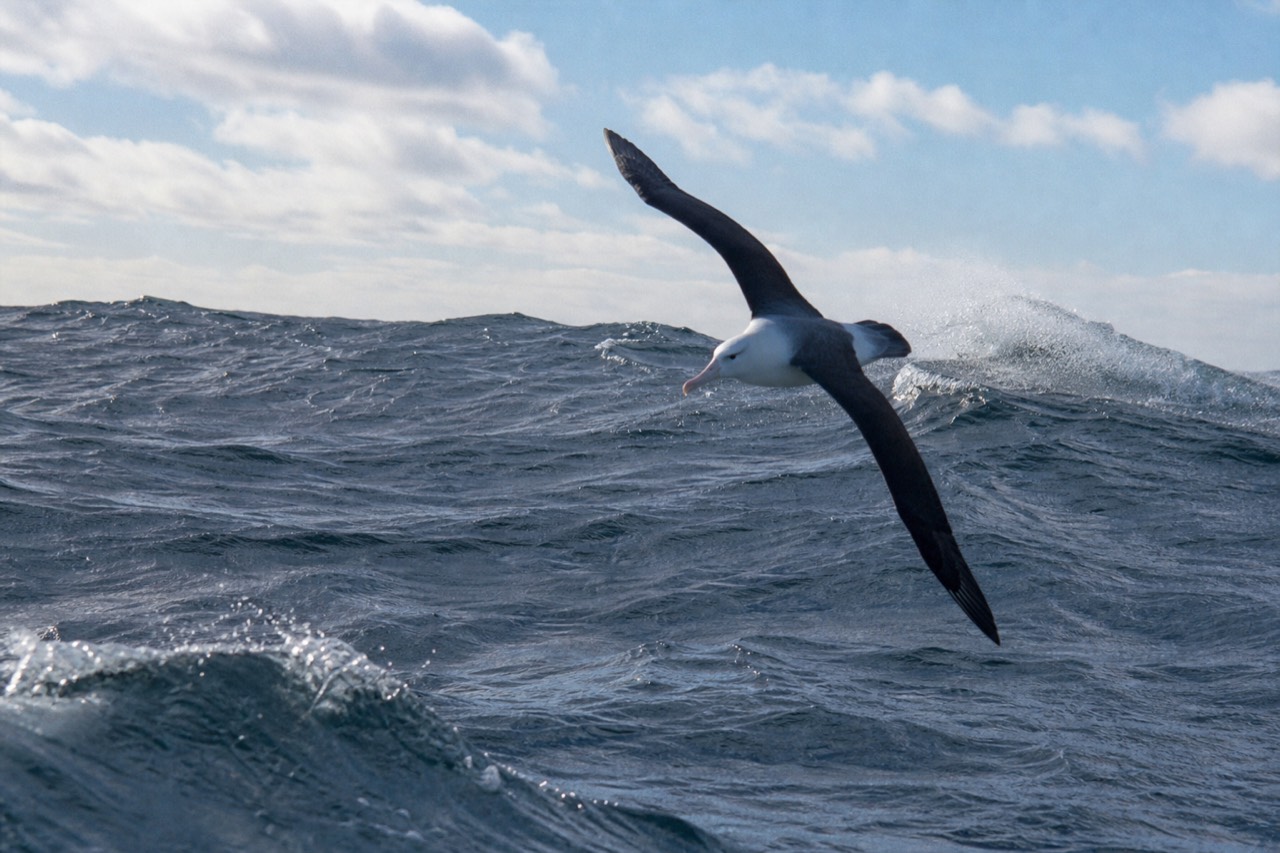
The penguins get the photographs, but the numbers that make these islands globally significant belong to a seabird with a three-metre wingspan.
Short answer
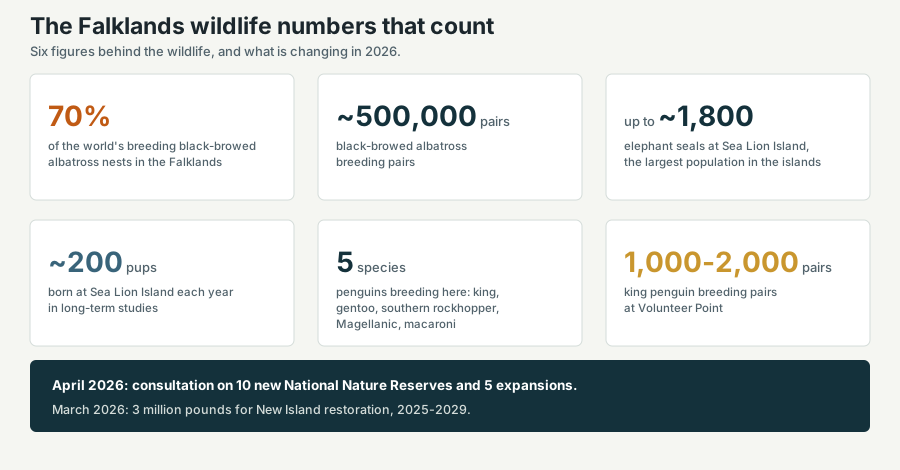
About 70 percent of the world's breeding black-browed albatross nests here, roughly 500,000 pairs. Sea Lion Island holds the largest southern elephant seal population in the islands, up to around 1,800 animals producing about 200 pups a year. Add sea lions, Commerson's dolphins, upland geese and raptors and the penguins stop being the only reason to book a wildlife day.
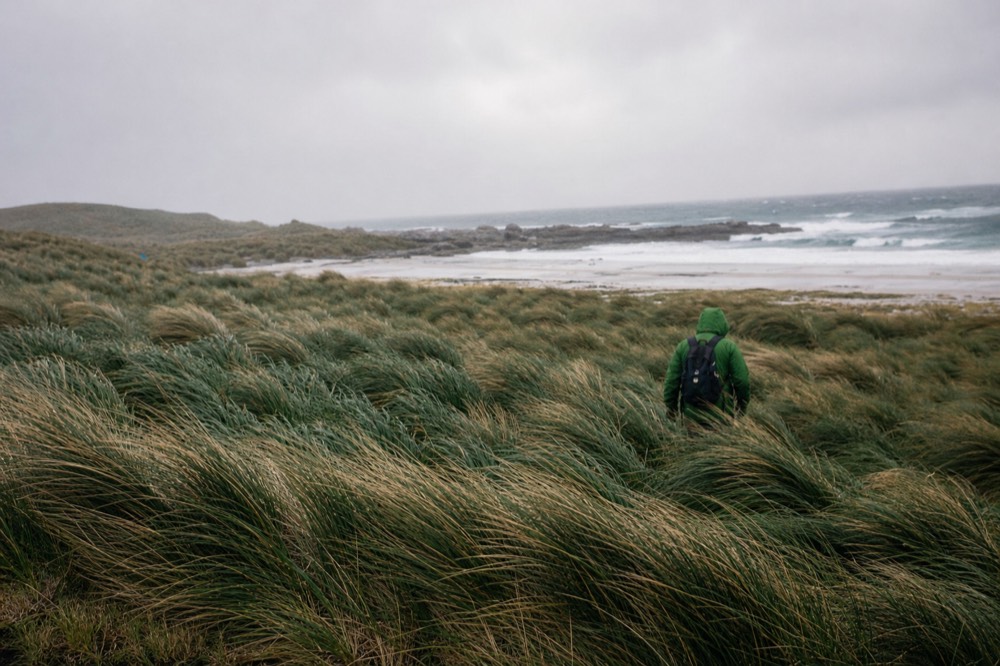
A pair of upland geese stands on the cropped grass beside the track, unbothered, while a caracara-shaped silhouette works the ridge behind them on a wind that never lets up. Out past the surf line something small and blunt-nosed rolls through a wave and vanishes. None of it is staged and none of it is far away. The Falklands sell themselves on penguins, and the penguins deliver, a case tested in full in how the islands rank among penguin destinations, but the wildlife that makes this place globally significant mostly has wings and spends its life over water.
Price comparisons are editorial snapshots from August 2026, except where updated. Final prices, reviews and booking terms can change; use your date and full party size on the provider’s page.
What Wildlife Do You See In The Falklands Apart From Penguins?
Black-browed albatross above all, with roughly 70 percent of the world's breeding population here. Then southern elephant seals, sea lions, Commerson's dolphins, upland geese and raptors. Some of it you meet without trying on any drive out of Stanley. Some of it needs an outer island and several days.
The honest split is between what a port day reaches and what it does not. Colonies within an hour or two of Stanley cover penguins, coastal birds, geese and, with luck, dolphins in the shallows. The seabird cliffs and the big seal beaches sit further out, on islands served by light aircraft rather than roads. Knowing which side of that line each animal falls on saves a lot of disappointment, and further out again sits the expedition-only route to South Georgia.
| Species | Where they are | Reachable on a Stanley port day? |
|---|---|---|
| Black-browed albatross | Island cliff and slope colonies away from the road network | No, this is an outer-island trip |
| King penguin | Volunteer Point, roughly 1,000 to 2,000 breeding pairs | Yes, on the 6h20m day from $398 pp |
| Gentoo penguin | Colonies within reach of Stanley and along the coast | Yes, from one hour upward |
| Southern rockhopper | Cliff colonies, mostly on the outer islands | Unlikely from town |
| Magellanic penguin | Burrows in coastal grassland and dune ground | Yes, on the short coastal outings |
| Macaroni penguin | The rarest of the five breeding species here | No, treat any sighting as luck |
| Southern elephant seal | Sea Lion Island holds the largest population, up to around 1,800 | No, needs an inter-island flight |
| Sea lion | Rocky shorelines and tide-line ledges around the coast | Sometimes, from coastal viewpoints |
| Commerson's dolphin | Inshore water, harbours, surf lines and kelp edges | Yes, opportunistically |
| Upland goose | Grazed grass beside settlements, tracks and shorelines | Yes, constantly |
| Raptors | Open camp, ridges and colony edges | Yes, on any drive out of town |
Why Does The Black-Browed Albatross Matter So Much Here?
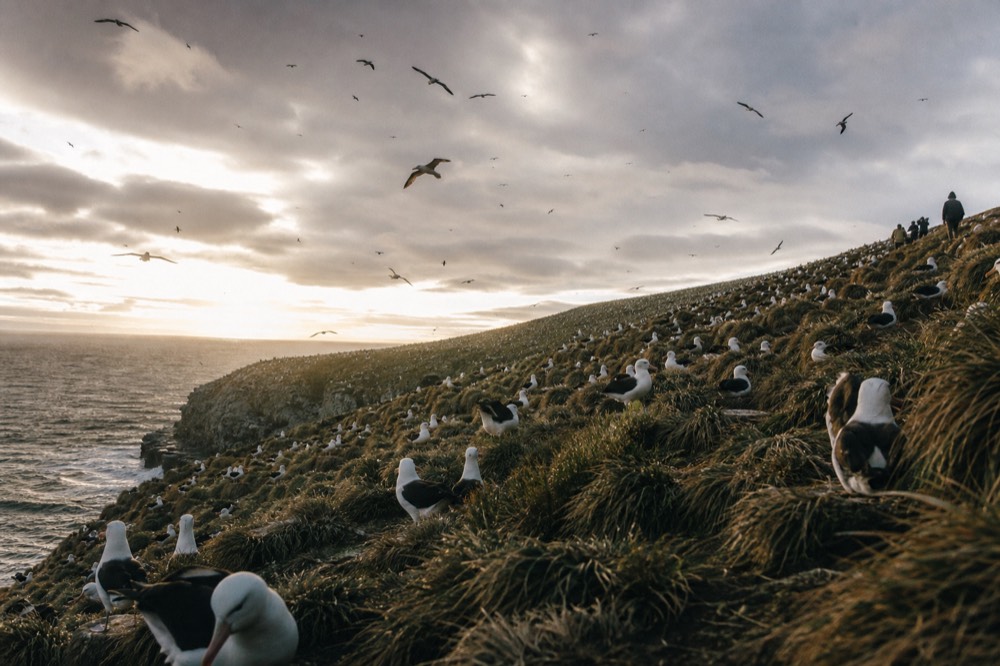
Because the Falklands hold roughly 70 percent of the entire world breeding population, about 500,000 pairs. That single figure does more to explain the islands' conservation status than any other statistic. Nowhere else carries that share of a globally threatened seabird, and the colonies are concentrated on a handful of islands.
Scale is the thing that does not translate into photographs. A black-browed albatross colony is not a scatter of nests on a cliff, it is a slope covered in mud-pedestal nests with birds landing and leaving continuously, and the noise carries a long way downwind. The birds themselves are built for the Southern Ocean rather than for land, which is why they look faintly ridiculous walking and extraordinary the moment they get airborne.
The population figure comes from Falklands Conservation, which runs the long-term seabird monitoring here. That work matters because a species can be numerous and still be in trouble: concentration in one place is itself a risk, and the same wind and swell that make these islands good albatross habitat also make them hard to survey. Most colonies sit on islands reached by air, so seeing one is a land-based itinerary rather than a shore excursion.
Where Do You Find Elephant Seals And Sea Lions?
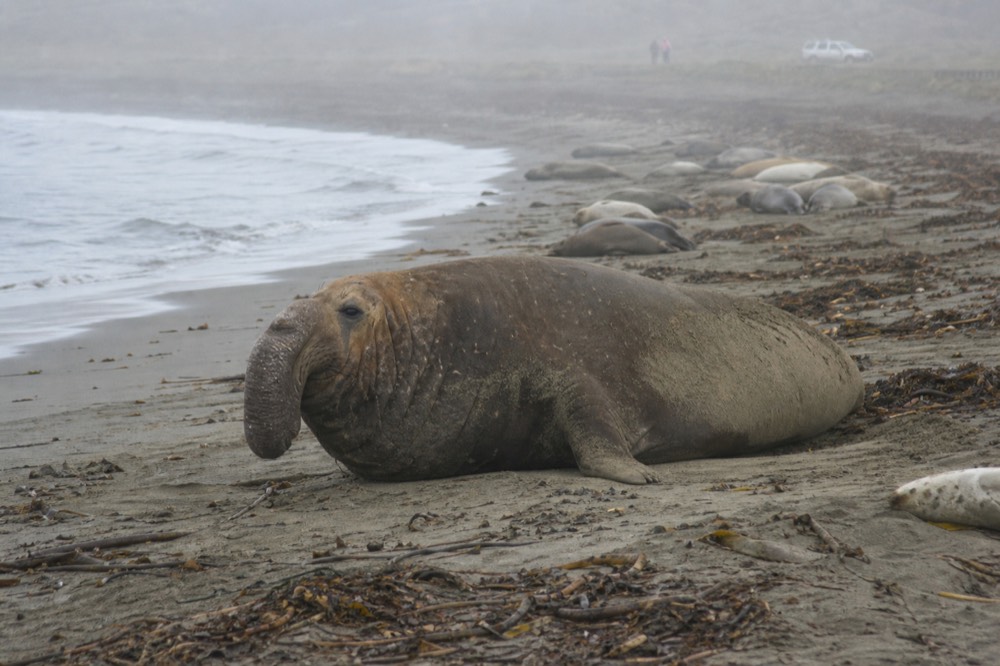
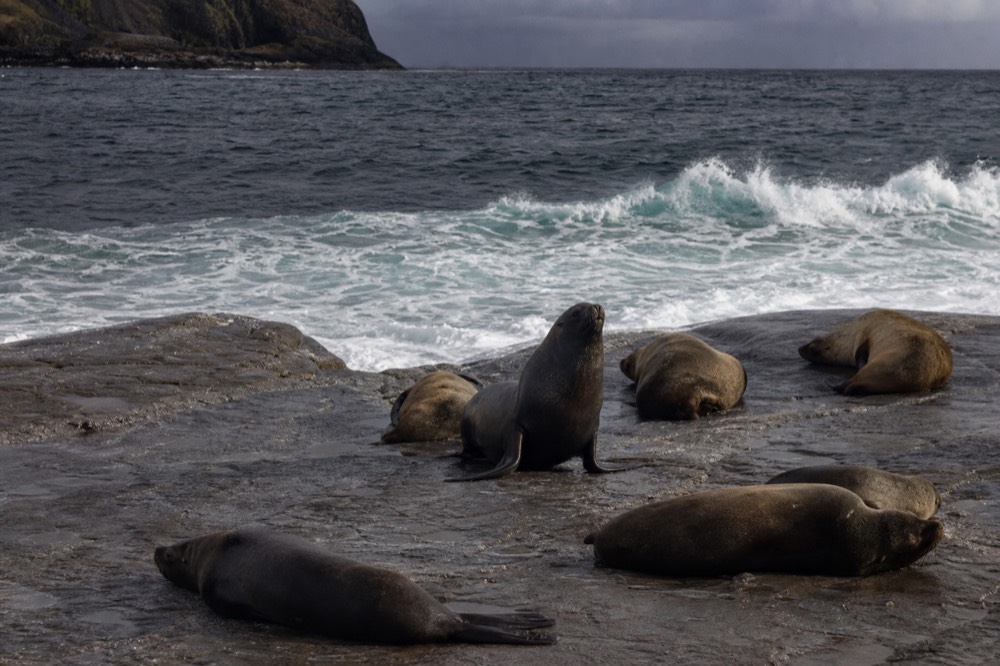
Sea Lion Island supports the largest southern elephant seal population in the Falklands, with up to around 1,800 animals recorded at the site and roughly 200 pups produced annually in long-term studies. Sea lions are more widely spread along rocky shorelines and turn up on coastal outings from Stanley without needing a dedicated trip.
Elephant seals are the biggest animals most visitors here will see on land, and the experience is nothing like watching a penguin colony. Bulls haul out and lie in wallows for days at a time, and the whole beach smells of it. Pupping season concentrates the drama, with the numbers above coming from decades of study at the one site that dominates the islands' population.
Sea lions work differently. They favour rock rather than sand, they are far more mobile, and they will be gone from a ledge that held a dozen animals an hour earlier. Guides watch the tide line for them on coastal runs. A private day with a naturalist buys you the patience that opportunistic sightings need, which is the real argument for the longer formats over the one-hour turnarounds.
Can You See Dolphins From Shore In The Falklands?
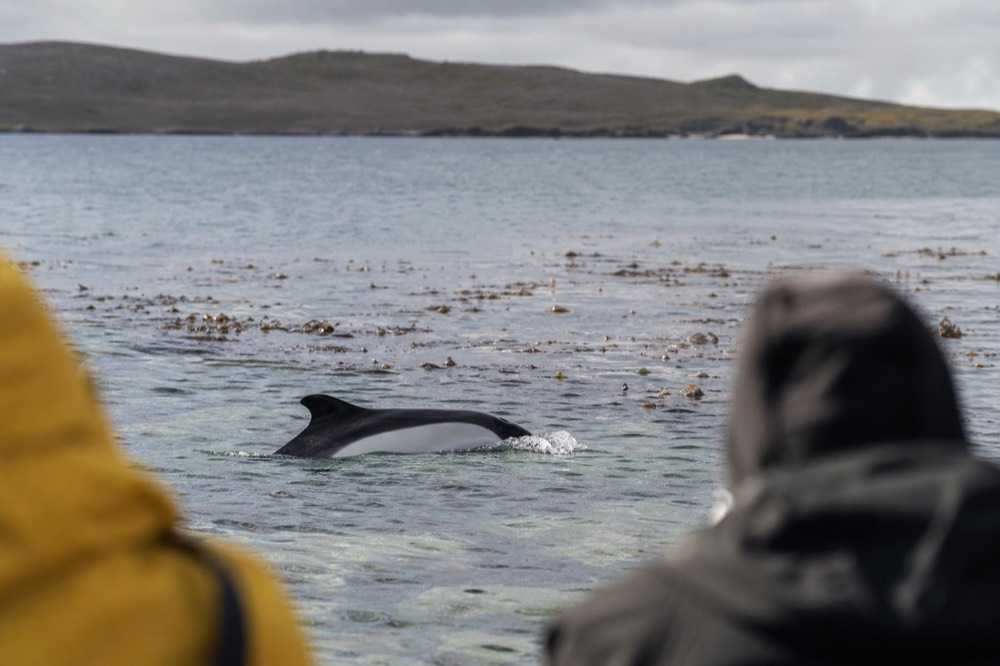
Commerson's dolphins work inshore water, harbours, surf lines and kelp edges, which puts them within sight of land far more often than most dolphin species. They are small, sharply marked in black and white, and fast. Sightings are opportunistic rather than scheduled, so no listing can promise them.
The thing to understand about Commerson's is that they behave like they are enjoying themselves. They ride surf, they come into shallow bays, and they will follow a boat or investigate a swimmer's wake. Their size is the surprise: people expect something bottlenose-scaled and get an animal closer to a large porpoise, moving twice as fast as expected.
Coastal outings from Stanley are the practical way to put yourself in front of them without a dedicated boat trip, because the short circuits run along exactly the kind of bay and headland water they favour. Nobody should book a tour purely for dolphins. Everyone should keep watching the water while they are out there, because the sightings that stay with people here are usually the ones nobody promised.
If you want the walk-versus-drive comparison for that stretch of coast, the coastal circuit at Gypsy Cove covers it, and the Bluff Cove lagoons handle the other easy-reach shoreline option.
Which Birds Do You Meet Without Even Trying?
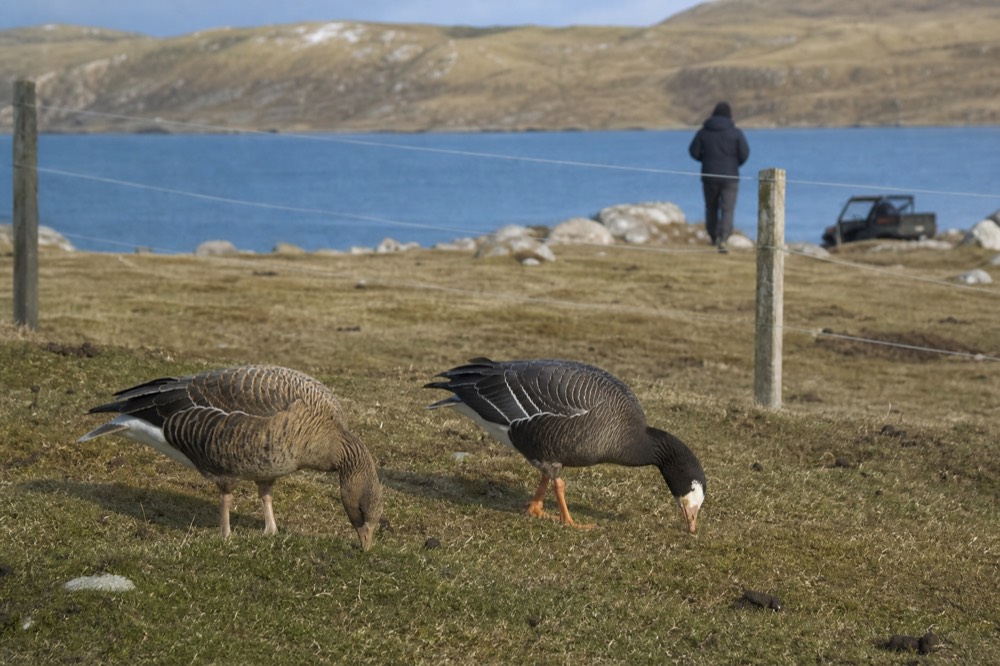
Upland geese, on almost every patch of grazed grass near a settlement or a track. Raptors working the wind over open camp, often at colony edges where they hunt. Waders and gulls along the beaches. None of these need a booking, and all of them turn a transfer drive into part of the wildlife day.
Upland geese are the ones people photograph without meaning to. The male is white-fronted and the female barred brown, they pair up and stay put, and they graze right next to vehicles because nothing here has taught them to be frightened of one. Once you have registered them, you see them everywhere, on airfield edges, along fence lines, on the cropped turf outside houses in Stanley.
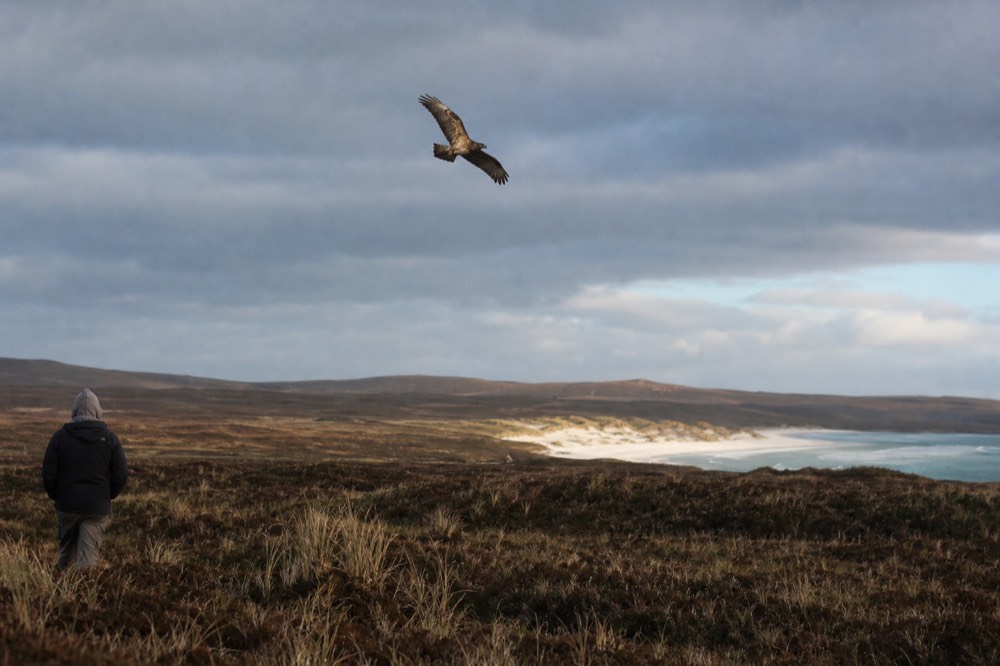
Raptors are the other constant. They hang on the wind above the moorland with barely a wingbeat, which is what an endless airflow over open ground gives you, and they are drawn to colony edges for obvious and slightly grim reasons. Beach ground adds another layer again: the long sand at Bertha's Beach pulls in shorebirds alongside the penguins, which is why the half-day runs that include it deliver a longer species list than the express options. It is worth checking what is included and the current price on the small-group version, since lunch, snacks, drinks and entry fees are all in it.
| Bird | Where you notice them | What they are usually doing |
|---|---|---|
| Upland geese | Grazed grass by settlements, tracks and shorelines | Grazing in pairs, ignoring vehicles |
| Raptors | Ridges, open camp and colony edges | Hanging on the wind, hunting the edges |
| Shorebirds and waders | Long sand beaches such as Bertha's Beach | Working the tide line |
| Gulls and skuas | Colony margins and the harbour | Scavenging around the colonies |
| Small passerines | Tussac grass, gorse and garden edges in Stanley | Feeding in whatever shelter exists |
How Does Avian Flu Affect A Wildlife Day In 2026?
Highly pathogenic avian influenza reached the islands' penguins in 2025. Cases were confirmed in gentoos on 28 August 2025, and dead penguins at Sparrow Cove returned positive swabs on 19 November 2025. The practical effect for visitors is that individual sites can close at short notice and operators reroute.
This deserves plain treatment rather than either reassurance or alarm. HPAI has moved through southern-hemisphere seabird and marine mammal populations over recent seasons, and the Falklands, holding the concentrations they do, were always going to be exposed. Government updates are published as detections occur, and the Falkland Islands Government avian influenza page is where those notices land.
For your day out, the consequences are logistical. A site that was open last week may be closed this week. Operators here run multiple sites and reroute rather than cancel, so the outing usually still happens somewhere. Book products with free cancellation, which every one of the nine listings offers at least 24 hours before departure and the Volunteer Point day requires three full days’ notice, and treat a specific colony as a hope rather than a guarantee. Biosecurity requests from guides, about boots, distance and staying on marked routes, are not theatre.
| Date | What was confirmed | What it means for visitors |
|---|---|---|
| 28 August 2025 | Avian influenza confirmed in gentoo penguins | First confirmed penguin cases of that season |
| 19 November 2025 | Positive swabs from dead penguins at Sparrow Cove | Demonstrated spread to a second location |
| Ongoing | Government updates issued as detections occur | Sites can close at short notice |
| On the day | Operators reroute to unaffected sites | Book free-cancellation products and stay flexible |
What Is Being Done To Protect All This?
Two things are moving right now. In April 2026 the Falkland Islands Government opened a public consultation on designating 10 new National Nature Reserves and expanding 5 existing ones. In March 2026 Falklands Conservation secured 3 million pounds for invasive species removal and wildlife reintroductions on New Island, running to 2029.
The New Island programme is the more concrete of the two. Invasive predators are the single biggest threat to ground-nesting and burrow-nesting seabirds on islands like these, and removing them is slow, expensive work that only pays off if it is funded to completion. A 2025 to 2029 window with 3 million pounds behind it is the kind of commitment that actually changes an island's ecology rather than pausing its decline. The wider programme sits with Falklands Conservation.
Monitoring underpins all of it. Gentoo and southern rockhopper populations are tracked through periodic island-wide censuses on roughly a ten-year cycle, which is the mechanism that tells anyone whether a bad flu season or a good breeding run actually moved the numbers. The most recently published full censuses predate the 2025 and 2026 seasons, so the effect of the recent avian influenza detections on island-wide totals is not yet a published figure.
| Programme | When | Scope |
|---|---|---|
| National Nature Reserve consultation | April 2026 | Public consultation on 10 new reserves and 5 expansions |
| New Island ecosystem restoration | March 2026 funding, running 2025 to 2029 | 3 million pounds for invasive species removal and threatened wildlife reintroductions |
| Island-wide seabird census | Roughly a ten-year cycle | Gentoo and southern rockhopper population monitoring |
| Avian influenza surveillance | Ongoing since 2025 | Detections published as they are confirmed, sites closed where needed |
Volunteer Point adds opportunities to watch open-country birds en route. For a targeted elephant-seal visit, Whale Point is a separate long-day option, with 6–7 hours needed for the private Wild Shores itinerary.
Which Outing Gives The Best Non-Penguin Wildlife?
The private naturalist formats, by a distance. Five to six hours with a guide whose job is species rather than schedule beats any express run. The small-group Bertha's Beach day is the strongest shared option, because long sand and open camp both feature and lunch is included.
Time is the variable that matters. A one-hour colony visit is a penguin transaction, and it is honest about that. Anything over four hours starts crossing enough different ground, coast, camp, beach and settlement edge, to build a real species list. Private transport gives your group its own vehicle, but the current Bertha’s Beach & Beyond and Penguin Paradise listings use per-person pricing that varies with party size. Compare the final total for everyone on your date; a headline price is not a flat vehicle quote.
| Outing | Non-penguin wildlife it realistically covers | Duration | From |
|---|---|---|---|
| Private Guided Eco Nature Tour | Naturalist-led, widest species coverage of the nine | 5-6h | $419.92 pp |
| Bertha's Beach, Rookery Bay and Gypsy Cove | Shorebirds, coastal species, open camp between stops | 4-5h | $234 pp |
| Bertha's Beach and Beyond, private | Same ground with the stopping decisions in your hands | 4-5h | Current party quote |
| Private Penguin Paradise | Coast plus a full town circuit, geese and raptors en route | 5h | Current party quote |
| Volunteer Point King Penguin Day | The most open camp of any listing, roughly two hours each way | 6h20m | $398 pp |
| Gypsy Cove, Yorke Bay and Stanley Highlights | Coastal birds, dolphin chance at the surf line | 2h30m | $135 pp |
| One-Hour Gentoo Colony Express | Effectively penguins only | 1h | $40 pp |
What Can Derail A Wildlife Day, And What Do You Do About It?
Weather, tenders and site closures, in that order. Wind cancels tender operations before it cancels anything on land. A colony can shut at short notice after an avian influenza detection. Inter-island flights have no fixed schedule at all, so land-based plans need slack in them.
None of these are reasons to skip the wildlife. They are reasons to book the way experienced visitors book: free cancellation, a second option in mind, and no single must-see item carrying the whole trip. The islands reward people who treat the plan as provisional, because the weather here will make that decision for you sooner or later anyway.
| What can go wrong | Why | The practical answer |
|---|---|---|
| Tender cancelled | Wind and swell govern ship-to-shore operations | Book outings with free cancellation, all nine listings offer it at least 24 hours before departure |
| Colony closed | Avian influenza detection at a specific site | Operators reroute to unaffected sites; keep the destination flexible |
| No inter-island flight | Schedules are published only the afternoon before | Build spare days into a land-based itinerary |
| Overweight bag | Inter-island flights allow 20 kg per visitor including hand luggage | Pack for the limit, not for the airline you flew in on |
| Nothing showing | Sea lions and dolphins are opportunistic anywhere | Choose a longer format, since time on the ground is what buys sightings |
Timing the trip itself is a separate question, and when to come, month by month handles it, while which month suits penguin breeding covers the species calendar. If the landscape itself puzzles you, why the islands have no trees explains the tussac and moorland you will be looking at all day. For how a wildlife outing fits alongside everything else ashore, see everything you can do on the ground, and for the species-by-site penguin question specifically, the penguin outings compared. The longer formats are grouped as the private-day tours if you want to compare them directly.
Common Questions
What animals live in the Falkland Islands besides penguins?
Black-browed albatross above all, with roughly 70 percent of the world breeding population and about 500,000 pairs. Southern elephant seals concentrate at Sea Lion Island, up to around 1,800 animals producing about 200 pups a year. Sea lions, Commerson's dolphins, upland geese, raptors, shorebirds and gulls fill out what most visitors actually see on a day out.
Where is the best place to see albatross in the Falklands?
The colonies sit on outer islands rather than along the roads from Stanley, so seeing one means an inter-island flight and a land-based itinerary rather than a cruise port day. Those flights carry a 20 kg baggage limit per visitor including hand luggage and are scheduled only the afternoon before, so allow spare days.
Is avian flu still a problem in the Falkland Islands?
Detections were confirmed in gentoo penguins on 28 August 2025 and in dead penguins at Sparrow Cove on 19 November 2025, and government updates continue as new cases are confirmed. For visitors the effect is that individual sites can close at short notice. Operators reroute to unaffected sites, so outings generally still run.
Can you see elephant seals on a cruise day in Stanley?
Yes, if your usable shore window covers the long outing. The private Wild Shores tour visits elephant seals at Whale Point/Kelp Point and takes 6–7 hours, with substantial off-road driving. Confirm pickup, the return buffer and what happens after a delayed tender; Sea Lion Island is a separate destination that normally requires additional travel.
How many penguin species live in the Falkland Islands?
Five breed here: king, gentoo, southern rockhopper, Magellanic and macaroni. Kings concentrate at Volunteer Point, where recent estimates put the colony at roughly 1,000 to 2,000 breeding pairs. Gentoos are the species most short outings visit. Macaroni is the rarest of the five, so treat any sighting as a piece of luck rather than an itinerary item.
What is being done to protect Falklands wildlife?
Falklands Conservation secured 3 million pounds in March 2026 for invasive species removal and threatened wildlife reintroductions on New Island, running through 2029. In April 2026 the Falkland Islands Government opened a public consultation on 10 new National Nature Reserves and 5 expansions. Gentoo and rockhopper numbers are tracked by island-wide census on roughly a ten-year cycle.
Your Next Step
Choose Your Falklands Outing
Initial suggestion; use the optional controls to compare your plans.
Match The Outing To Your Plans
These controls compare the listed itineraries, not personal fitness or guaranteed departure availability. Confirm child ages, access needs and ship return arrangements before paying.
Private Wild Shores: Elephant Seals: Whale Point elephant seals and gentoo penguins, with a homemade lunch. 6–7 hours; private.
Private Guided Eco Nature Tour: An electric-car nature day with a conservation-experienced guide and smoko picnic. 5–6 hours; private.
Penguins & Stanley Sightseeing: Yorke Bay, Gypsy Cove and Stanley landmarks with a local guide. 2h 40m; shared.
Compare Your Actual Quotes
Use the same currency and comparable inclusions. A private vehicle is not automatically sold at a flat vehicle price; copy the final total for your party from the provider.
No listed outing matches these choices. Adjust or reset them; suitability that needs individual confirmation must be checked with the operator before booking.
Check your travel date before arranging the rest of your visit. Whale Point elephant seals and gentoo penguins, with a homemade lunch.
Private Wild Shores: Elephant Seals · 6–7 hours
Long off-road drive; not recommended with spinal injuries. Delayed tender arrivals can require a different route.
Choose a date to check the published schedule. Availability and final price are confirmed on Viator.