Best Time To Visit The Falkland Islands: A Month-By-Month Guide
The season is short, the peak is shorter, and the wind does not take a month off.
Short answer
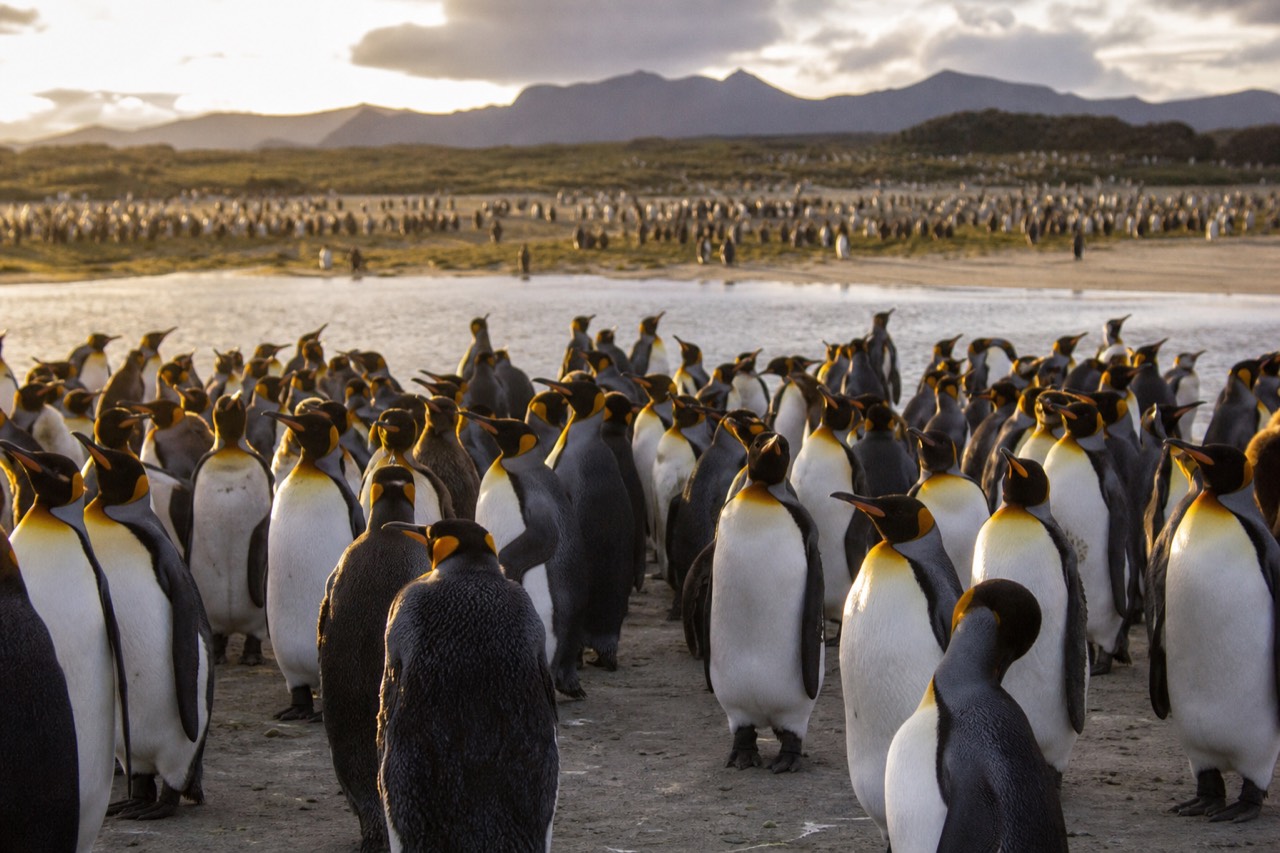
The visitor season runs roughly October to March or April, with November to February as the peak. That window carries the cruise season, which this year is forecast at 53 vessels, around 140 calls and about 72,500 passengers. King penguins hold Volunteer Point year-round, so the real question is not whether wildlife is there but how much daylight, tour availability and shelter from the wind you want.
Ask a local when to come and you get a wry answer about the wind. Ask a tour operator and you get a date range. Both are right. The Falklands run a real season, with a beginning in October and an end somewhere in March or April, and inside it the difference between a good week and a frustrating one is less about temperature than about how much slack you built into the plan.
What follows is the month scorecard, the cruise rhythm that turns Stanley from a quiet town into a busy one and back within a few hours, and an honest account of the weather that governs everything.
Price comparisons are editorial snapshots from August 2026, except where updated. Final prices, reviews and booking terms can change; use your date and full party size on the provider’s page.
When Is The Best Time To Visit The Falkland Islands?
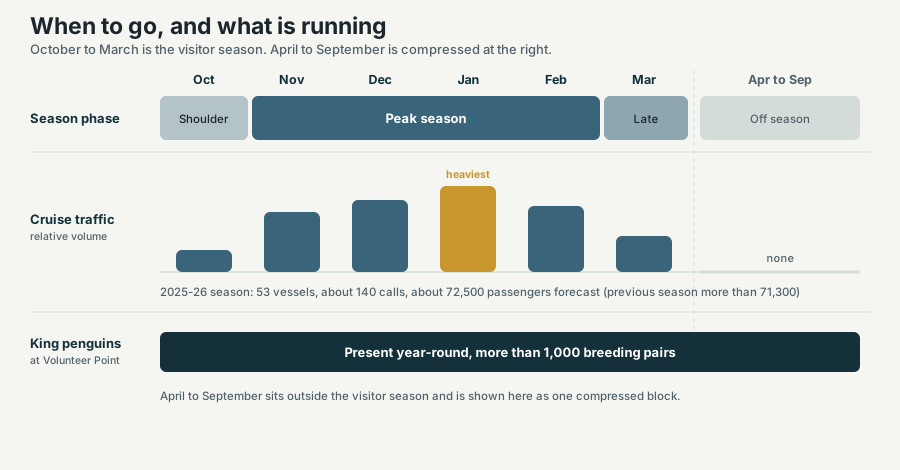
November to February is the peak: the fullest tour schedule, the busiest cruise calendar and the longest daylight of the southern summer. October is the shoulder, quieter and less certain. March into April tails off as ships thin out. King penguins hold Volunteer Point all year, so timing decides conditions and crowds, not whether the penguins are there.
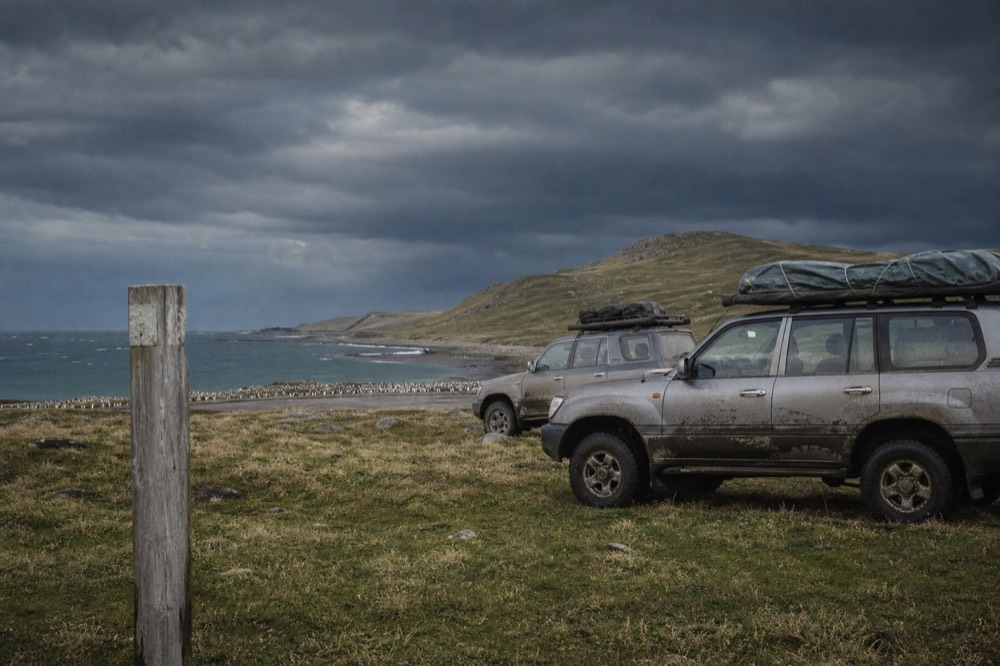
That last point is the one that reframes most people's planning. Plenty of destinations have a wildlife window you either hit or miss. Volunteer Point does not work that way for kings, which are present through the year. What changes with the calendar is everything around them: whether the tour is running, whether the ships are calling, whether the track out across camp is passable in reasonable time, and how many other vehicles are at the colony when you get there.
So the decision splits in two. Cruise passengers do not choose a month at all, they choose an itinerary and inherit the date. Land-based visitors choose freely, and for them the trade is between the certainty and busyness of the peak and the quiet, thinner-scheduled shoulder.
What Does Each Month Actually Offer?
October opens the season quietly. November through February carries the peak: full tour schedules, heaviest cruise traffic, longest days. March holds up well and thins toward the end. April to September is the off-season, when the visitor infrastructure winds down and the ships stop coming altogether.
The scorecard below is built around what changes for a visitor rather than around averages. Read it alongside your own constraint. If you are on a ship, your row is chosen for you and the useful columns are crowd level and tour availability. If you are flying in, every row is open and the honest advice is to weight daylight and schedule reliability above everything else.
| Month | Season phase | Cruise traffic | Tour availability | Who it suits |
|---|---|---|---|---|
| October | Shoulder, season opening | Light, building | Most tours running, thinner schedules | Travelers who want quiet and can flex |
| November | Peak begins | Heavy | Full schedule | Everyone; the season's most reliable opening month |
| December | Peak | Heavy | Full schedule | Long daylight, book well ahead |
| January | Peak | Heaviest | Full schedule, sells out first | Cruise passengers, first-time visitors |
| February | Peak | Heavy | Full schedule | Balanced conditions and availability |
| March | Late season | Tapering | Full early, thinner late | Quieter colonies, lower booking pressure |
| April | Season closing | Very light to none | Reduced, weather-dependent | Flexible independent travelers only |
| May to September | Off-season | None | Minimal | Residents, workers, researchers |
The pattern that emerges is not subtle. Four months carry almost the whole visitor year, and one of them, January, carries the heaviest concentration of ship calls. If your priority is the colony to yourself, aim at the ends of the season. If your priority is certainty that everything is running, aim at the middle.
How Does The Cruise Season Shape Your Visit?
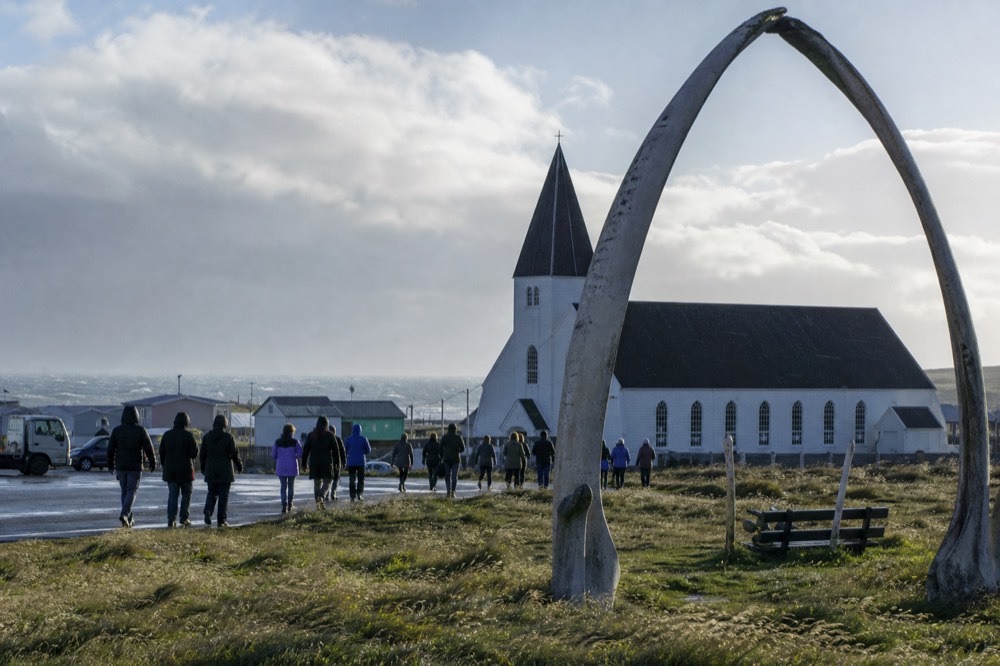
The season runs November to March or April with an October shoulder. This year's forecast is 53 vessels and roughly 140 calls carrying about 72,500 passengers, up on the 71,300-plus of the previous season. Stanley absorbs that in bursts: a busy morning ashore, then a town of a few thousand again by evening.
Understanding the rhythm helps whichever side of it you are on. A cruise call concentrates several hundred to several thousand visitors into a handful of hours, all funnelled through one public jetty. Tour vehicles run in waves, the cafes fill, and the museum sees its whole day's traffic between mid-morning and mid-afternoon.
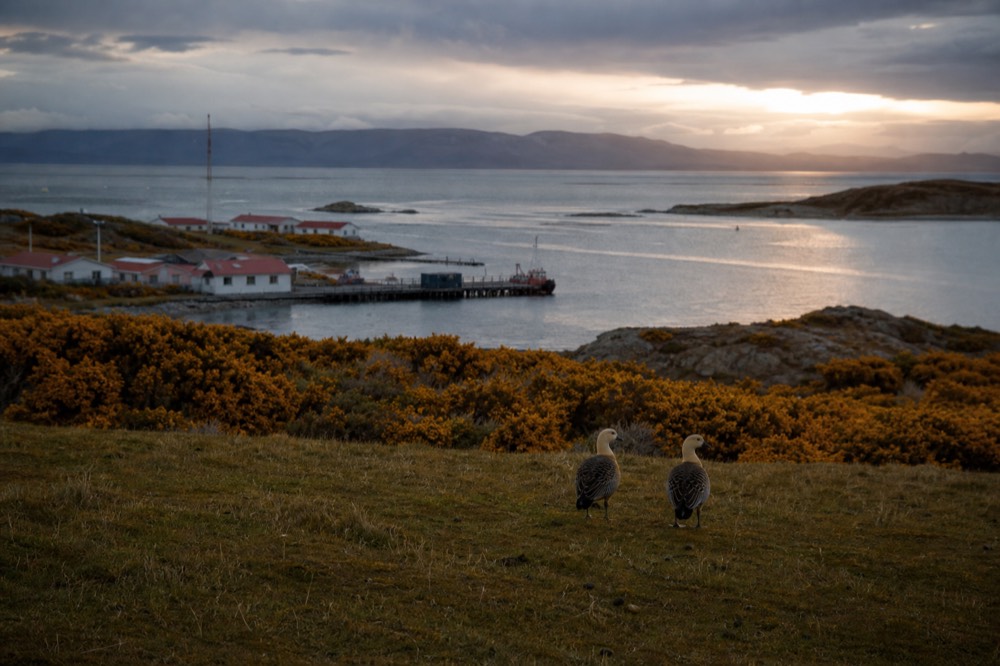
For a land-based visitor that means the calendar matters at the level of the day, not the month. If two ships are in, the short excursions book out and the waterfront is busy. If none are in, you may find yourself the only visitor at a colony. The tourist board publishes the per-vessel schedule ahead of the season, and the islands' newspaper, Penguin News, reports on how the season is running as it goes.
For a cruise passenger the implication is different and more urgent: book the excursion you want in advance rather than on the day, because the whole ship is choosing from the same pool of vehicles. The mechanics of that, including the tender maths, sit in the Stanley port-day playbook.
| Cruise season measure | This season's figure |
|---|---|
| Vessels expected | 53 |
| Calls forecast, Stanley and outer islands | Around 140 |
| Passengers forecast | Around 72,500 |
| Previous season recorded | More than 71,300 |
| Season length | November to March or April, October shoulder |
| Typical arrival method | Tender to the public jetty; smaller expedition ships may berth at FIPASS |
What Wildlife Can You See, And When?
Five penguin species breed in the islands: king, gentoo, southern rockhopper, Magellanic and macaroni. Volunteer Point's king colony runs to more than a thousand breeding pairs and is there year-round. The islands also hold around 70 percent of the world's breeding black-browed albatross, roughly 500,000 pairs.
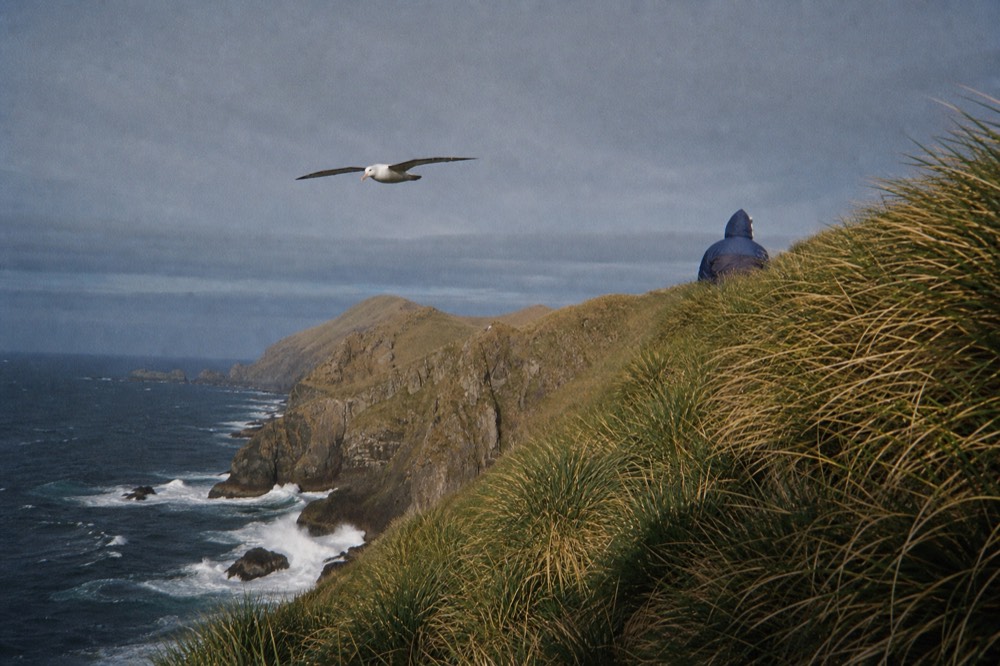
Those are the headline numbers, and they explain why the Falklands punch so far above their size for wildlife. The albatross figure in particular is the kind of statistic that does not translate until you stand on a cliff edge in wind and watch birds hold station without a wingbeat. Falklands Conservation publishes the population work behind it.
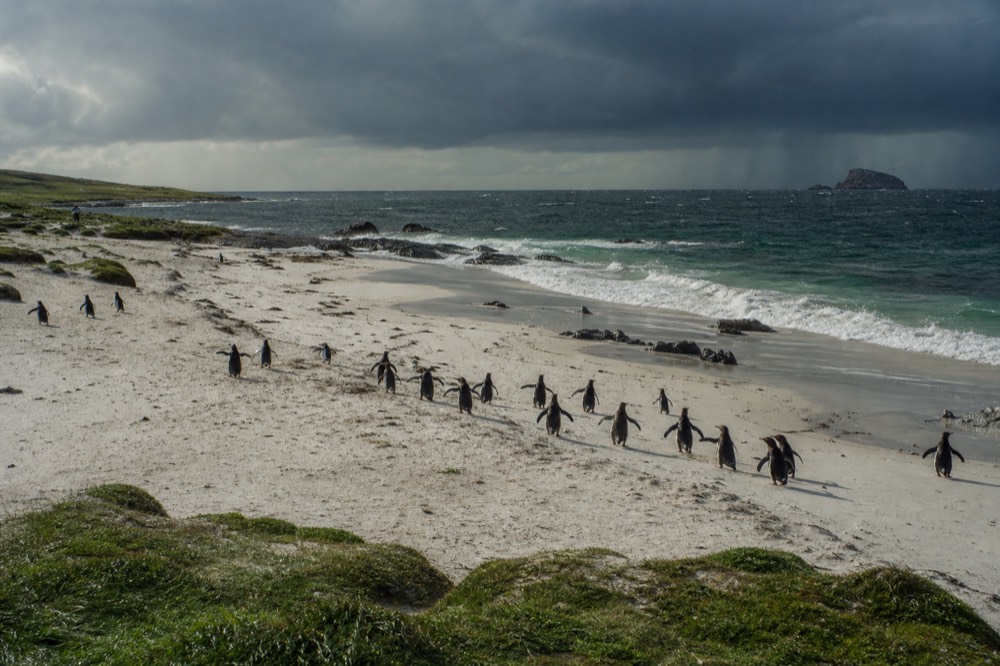
Species-level breeding timing is its own subject, and it is covered properly in the piece on which month is best for seeing penguins. What belongs here is the trip-planning version: the season and the wildlife window overlap almost exactly, so a visit inside October to March puts you in front of penguins regardless of the specific weeks you pick. The variable is which species and which stage of their year, not whether there are birds.
Two current items are worth knowing. Highly pathogenic avian influenza was confirmed in gentoos on 28 August 2025, with positive swabs recorded at Sparrow Cove on 19 November 2025, and sites can close at short notice while operators reroute. Separately, the Falkland Islands Government ran a consultation in April 2026 on ten new National Nature Reserves and five expansions, and Falklands Conservation secured £3 million in March 2026 for a New Island restoration programme running to 2029.
| What you can see | Where the tours go | Notes |
|---|---|---|
| King penguins | Volunteer Point | More than 1,000 breeding pairs, present year-round |
| Gentoo penguins | Bertha's Beach, colonies near Stanley | The species behind the one-hour express run |
| Magellanic penguins | Burrow sites including the Gypsy Cove area | Ground-nesting, seen on the short loops |
| Southern rockhopper and macaroni | Cliff and outer-island sites | Two of the five species that breed in the islands |
| Black-browed albatross | Cliff colonies, largely outer islands | Around 70 percent of the world breeding population |
| Elephant seals | Sea Lion Island | Largest population in the islands, up to around 1,800 seals and about 200 pups a year |
How Bad Is The Wind, Really?
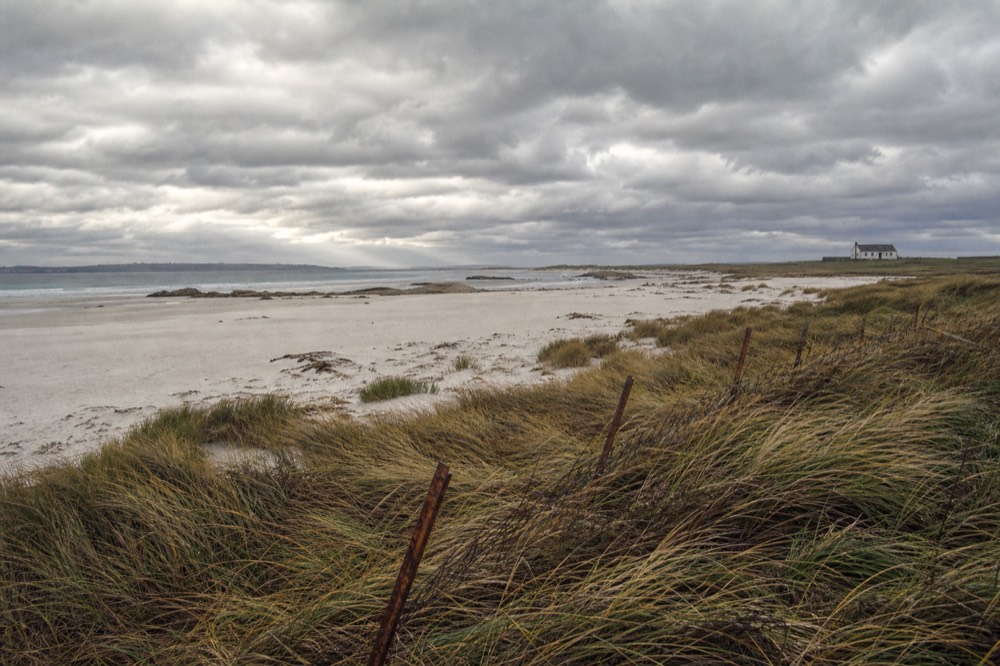
Wind is the constant here, not rain. It blows off the Southern Ocean with nothing to slow it down, it can change a beach from pleasant to punishing in minutes, and it is what closes a cruise call rather than a shower. Plan for layers, a hood that fastens, and the possibility that a day goes sideways.
Visitors from temperate northern climates consistently misjudge this. The temperature is not the story, though whether the islands ever get properly warm is a fair question in its own right. What matters is exposure: most of the wildlife sites are open ground, dune, beach or clifftop, with no trees anywhere in the islands and therefore no natural windbreak. You are in it, and you stay in it for as long as the tour lasts.
The second thing to accept is variability within a single day. Conditions here move fast. A grey, blowing morning can open into flat light and stillness by lunch, and the reverse happens just as often. This is why the operators build flexibility into routes and why the free cancellation windows exist. It is also the strongest single argument for a land-based stay of several days over a single fixed day ashore: with a week you can move a plan, with one port call you cannot.
What this means for month selection is less than people expect. There is no month that reliably escapes the wind. There is only a season where the daylight is long, the tours are running and the conditions are workable, and that season is the one on the scorecard above.
Are The Shoulder Weeks Worth It?
October and late March trade certainty for quiet. Fewer ships call, colonies are less crowded, and short-notice availability is better. In exchange you get thinner tour schedules, a higher chance a day is lost to weather, and less margin if a site closes. For a flexible traveler with several days, the trade is often worth taking.
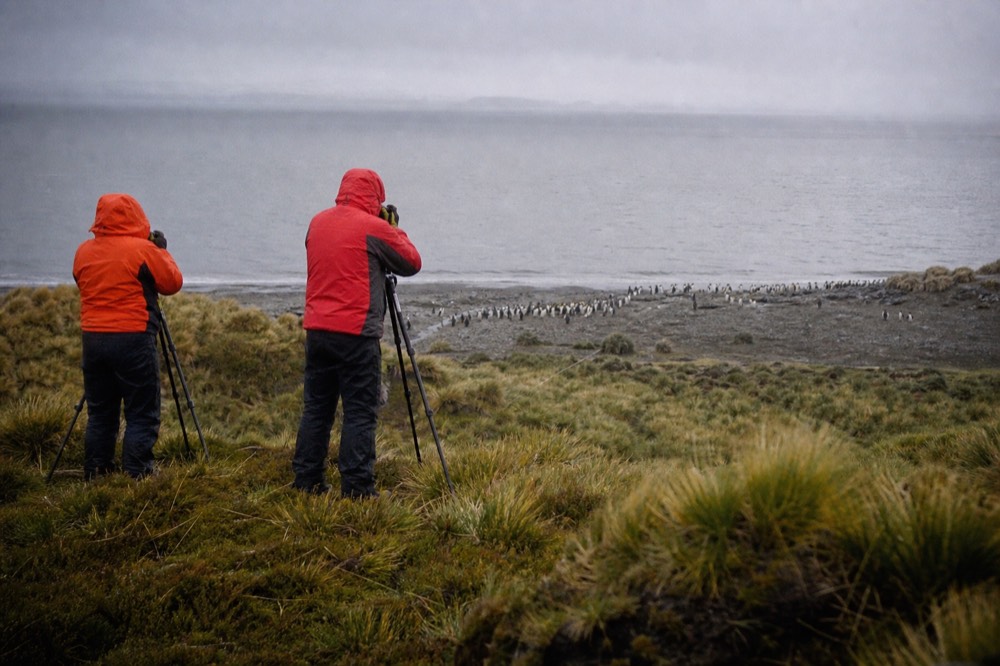
The shoulder appeals most to people who have already decided that the experience matters more than the itinerary. A quiet Volunteer Point in the shoulder is a different thing from a busy one in January: fewer vehicles at the colony, fewer people at the fence line, more chance of the kind of long unhurried watching that photographers want.
The risk is real too. A thinner schedule means fewer departures to move to if yours cancels, and the season's edges are where a bad weather run does the most damage to a short trip. The mitigation is straightforward: come for longer, book the flagship day early in your stay so a cancellation leaves room for a second attempt, and keep the free cancellation deadlines in view.
There is also a money angle. Lower demand at the edges of the season generally means less pressure on the scarce inventory, particularly the private vehicle days where a single group takes the whole car. The cost side of the trip is worked through in detail in the 2026 cost breakdown.
| Peak, November to February | Shoulder, October and late March | |
|---|---|---|
| Tour schedule | Full, every option running | Thinner, fewer departures to switch to |
| Cruise traffic | Heavy, January heaviest | Light and building, or tapering |
| At the colony | More vehicles, more people at the fence | Often near-empty |
| Weather risk to a short trip | Lower | Higher; fewer spare days |
| Short-notice availability | Poor on the flagship days | Usually workable |
| Best suited to | One-shot visitors, cruise passengers | Photographers, repeat and flexible travelers |
Which Month Suits Which Traveler?
Cruise passengers should optimise the excursion, not the month. Photographers do better at the season's edges. First-time visitors with one shot at it should take November to February. Anyone with mobility limits should favour the peak, when the fullest range of short, low-impact options is running.
The matrix below is the shortest useful version of this page. It assumes you can choose, which mostly means you are flying in rather than sailing in, and it assumes you have already settled the prior question of who a Falklands trip fits.
| Traveler | Aim for | Reasoning |
|---|---|---|
| First-time visitor, one trip | November to February | Full schedules, longest daylight, least chance of a lost day |
| Photographer | October or March | Quieter colonies, more room at the fence, softer light at the season's edges |
| Cruise passenger | Whatever your itinerary gives | Spend the planning effort on the excursion and the tender buffer instead |
| Group of three or four | Any peak month, booked early | Compare a date-specific total for your entire party |
| Limited mobility | Peak months | Confirm individual suitability; shorter tours also have restrictions |
| Outer-island trip | Peak months | FIGAS demand and lodge staffing are both at their strongest |
| Tight budget | Shoulder weeks | Less pressure on scarce vehicles and beds |
Travelers who want a naturalist rather than a driver-guide, and who have the hours for it, tend toward the longer private options. The five-to-six-hour eco nature day leans hardest into that, and the wider picture of what lives here beyond the penguins is set out in the guide to Falklands wildlife past the colonies.
Can You Visit Outside The Season?
You can travel to the islands year-round: the LATAM flight runs every Saturday and the UK airbridge twice weekly, all year. What stops in winter is the visitor infrastructure. Cruise ships do not call between roughly April and October, tour schedules reduce sharply, and daylight is short.
This distinction matters because the two things get confused. Access is year-round. Tourism is not. A winter visitor can absolutely reach Stanley, and some do for work or family reasons, but the array of bookable wildlife days that this site tracks is a summer proposition.
If you are considering the far edges, late March into April is the realistic outer limit rather than May. Operators run while there is demand, and demand collapses when the ships stop. Before building anything around an out-of-season date, read how the routes actually work in the guide to reaching the islands in 2026, because the weekly flight rhythm becomes far less forgiving when there are fewer alternatives on the ground.
How Far Ahead Should You Book?
Book the flagship days as soon as your dates are fixed. Volunteer Point runs a maximum of four passengers per vehicle, so check the departure for your actual ship date. Full-refund deadlines differ: three full days before Volunteer Point, and commonly 24 hours for the shorter tours. These deadlines do not guarantee a refund after a same-day missed port.
The scarcity here is vehicles and guides, not seats in a coach. A four-passenger cap on the island's marquee day means capacity is genuinely small, and on a January morning with multiple ships in port the demand is very much larger than the supply. Reviewers on that day consistently rate it highly, 4.8 across 223 reviews, which does nothing to ease the pressure. The full account of the track, the colony and the hours involved is in the Volunteer Point day, explained.
The sensible sequence: fix your dates, book the one experience you would be disappointed to miss, then fill in around it. Because the cancellation windows are generous, an early booking costs you nothing if plans change.
For shorter or cheaper options the pressure is lower but not absent. The one-hour gentoo run caps at 12 and the shared sightseeing loop at 15, so on busy days they go too. It is worth seeing what is running on your date rather than assuming a walk-up will work. Every option, with duration, rating and price basis, sits together on the page of all nine bookable tours, and the long king penguin days are grouped under the king penguin section.
| Tour | Capacity constraint | Cancellation window | Booking urgency |
|---|---|---|---|
| Volunteer Point King Penguin Day | 4 per 4x4 | Full refund with at least 3 full days’ notice | Highest; book first |
| Shared Penguins & Stanley Sightseeing | Max 15 | Free up to 24 hours before | High on multi-ship days |
| Gypsy Cove, Yorke Bay & Stanley Highlights | Max 16 | Free up to 24 hours before | Moderate |
| One-Hour Gentoo Colony Express | Max 12 | Free up to 24 hours before | Moderate, small vehicle |
| Private vehicle days | One group per vehicle | Free up to 24 hours before | High in peak months |
Frequently Asked Questions
What is the best month to visit the Falkland Islands?
December and January give the longest daylight, the fullest tour schedule and the heaviest cruise traffic. November and February offer the same reliability with slightly fewer people. If you would rather have quiet colonies than certainty, October and March are the shoulder weeks, with thinner schedules and a higher chance of losing a day to weather.
When is the Falklands cruise season?
Roughly November to March or April, with an October shoulder. This season is forecast at 53 vessels making around 140 calls across Stanley and the outer islands, carrying about 72,500 passengers, up on the more than 71,300 recorded the previous season. No ships call between about April and October.
Can you see king penguins in the Falklands all year?
Yes. The king colony at Volunteer Point, more than a thousand breeding pairs, is present year-round. What changes with the calendar is access rather than presence: the 6 hour 20 minute tour from $398 per person runs through the visitor season, and the rough final stretch across open camp is more predictable in the summer months.
How windy is the Falkland Islands?
Wind is the defining condition, not rain. There are no trees anywhere in the islands and most wildlife sites are open beach, dune or clifftop, so there is no shelter. Conditions can change within an hour. Wind, rather than precipitation, is what shortens or cancels a cruise call, which is why free cancellation matters here.
Is it worth visiting the Falklands in the off-season?
Access continues year-round: the LATAM flight runs every Saturday and the UK airbridge twice a week. Tourism does not. Between roughly April and October no cruise ships call, tour schedules reduce sharply and daylight is short. Late March into April is the realistic outer edge for a wildlife-focused trip rather than May onward.
How far in advance should I book a Falklands tour?
As soon as your dates are set, particularly for Volunteer Point, which carries only four passengers per vehicle and needs a full-day shore window. Free cancellation runs to three days before on that tour and 24 hours before on the other eight, but changes after the deadline can be chargeable, including a same-day ship reroute.
Your Next Step
Choose Your Falklands Outing
Initial suggestion; use the optional controls to compare your plans.
Match The Outing To Your Plans
These controls compare the listed itineraries, not personal fitness or guaranteed departure availability. Confirm child ages, access needs and ship return arrangements before paying.
Volunteer Point King Penguins: A four-person 4x4, king-penguin colony time and lunch. 6h 20m; shared.
Bertha’s Beach & Gypsy Cove: Bertha’s Beach and Gypsy Cove in a guided five-hour outing, with a lunch pack. 5 hours; shared.
Penguins & Stanley Sightseeing: Yorke Bay, Gypsy Cove and Stanley landmarks with a local guide. 2h 40m; shared.
Private Wild Shores: Elephant Seals: Whale Point elephant seals and gentoo penguins, with a homemade lunch. 6–7 hours; private.
One-Hour Gentoo Colony Tour: Off-road transport to Yorke Bay gentoos in a short outing. 1 hour; shared.
Private Guided Eco Nature Tour: An electric-car nature day with a conservation-experienced guide and smoko picnic. 5–6 hours; private.
Private Bertha’s Beach & Beyond: A private vehicle, Bertha’s Beach entry, snacks and hot drinks. 4–5 hours; private.
Compare Your Actual Quotes
Use the same currency and comparable inclusions. A private vehicle is not automatically sold at a flat vehicle price; copy the final total for your party from the provider.
No listed outing matches these choices. Adjust or reset them; suitability that needs individual confirmation must be checked with the operator before booking.
Check your travel date before arranging the rest of your visit. A four-person 4x4, king-penguin colony time and lunch.
Volunteer Point King Penguins · 6h 20m
Rough off-road journey; moderate fitness. Not recommended in pregnancy. Full refund requires at least three full days notice.
Choose a date to check the published schedule. Availability and final price are confirmed on Viator.