What Month Is Best To See Penguins?
Five species, one breeding calendar. November to February is the eggs-and-chicks window, and the Volunteer Point kings hold their colony in every month.
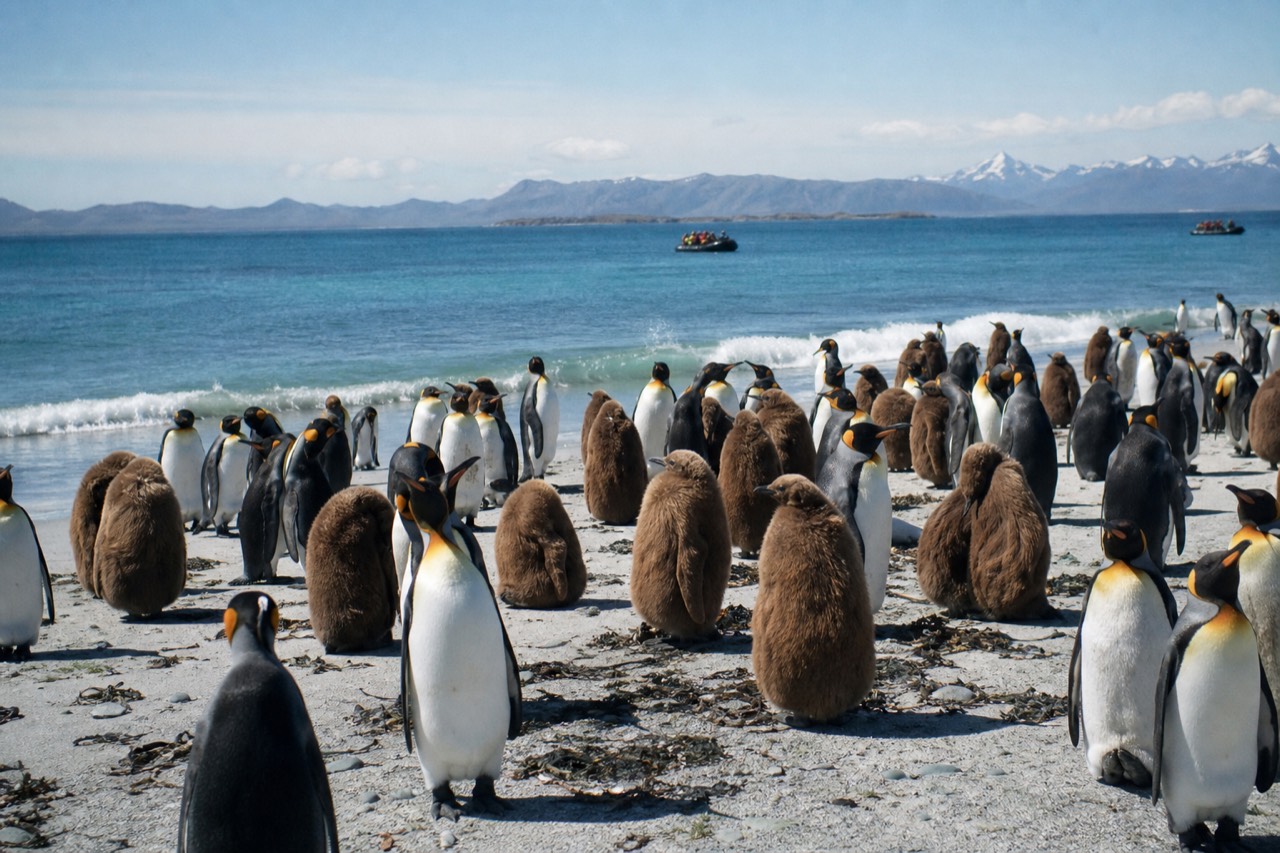
A king penguin colony announces itself before you see it. The noise carries across the dunes first, a brassy, layered call nothing like the yapping of the smaller species, and then the white sand turns orange and grey at the edges. Which month you stand there decides how much of that noise is chicks.
Price comparisons are editorial snapshots from August 2026, except where updated. Final prices, reviews and booking terms can change; use your date and full party size on the provider’s page.
What Month Is Best To See Penguins?
November through February. Four of the five Falklands species are on eggs or raising chicks across those months, and the tour calendar runs with them. King penguins are the exception: the Volunteer Point colony holds birds in every month of the year, so kings are the one species that does not depend on picking the right week.
The practical season runs October to March or April, with October and March as quieter shoulders. Those edges are fine for seeing penguins, they simply carry less certainty about what stage the birds are at. If you are picking dates for a whole trip rather than for one colony, the month-by-month scorecard for planning a trip weighs daylight, ship traffic and weather alongside the wildlife.
Which Penguins Live In The Falkland Islands?
Five species breed here: king, gentoo, southern rockhopper, Magellanic and macaroni. Volunteer Point holds the largest king colony in the islands, with recent estimates running from roughly 1,000 to 2,000 breeding pairs. Gentoos and Magellanics are the two you are most likely to meet on a short day out of Stanley.
Not all five are equally reachable. The day-tour network out of Stanley is built around a handful of East Falkland sites, and rockhoppers and macaronis are not on it. Falklands Conservation runs island-wide censuses of gentoos and southern rockhoppers on a roughly ten-year cycle, which is the backbone of the long-term numbers.
| Species | Where the Stanley tours reach them | What kind of day that means |
|---|---|---|
| King | Volunteer Point, the largest colony in the islands | A full 4x4 day, two hours each way over open camp |
| Gentoo | Yorke Bay sands, Bertha's Beach, a colony within an hour of town | Short loops, small-group days, private vehicles |
| Magellanic | Gypsy Cove burrows and the Rookery Bay viewpoint | Short loops and the three-site day |
| Southern rockhopper | No Stanley tour runs to a rockhopper colony | Outer-island travel by FIGAS or ship |
| Macaroni | The rarest of the five here | Outer-island travel, and luck |
What Is Each Species Doing, Month By Month?
Gentoos, Magellanics and rockhoppers share a rhythm: colonies fill in spring, eggs give way to chicks through November and December, and January and February are the loud, chick-heavy weeks. Kings run on their own long cycle and stay put. Macaronis turn up in such small numbers that no month is reliable.
| Species | October | November to December | January to February | March | Outside the season |
|---|---|---|---|---|---|
| King | Reliable | Reliable | Reliable | Reliable | Reliable, access permitting |
| Gentoo | Variable | Eggs, then small chicks | Chicks growing fast | Chicks still on the colony | Varies by site |
| Magellanic | Variable | Eggs and chicks in the burrows | Chicks at the burrow mouths | Variable | Not one to plan around |
| Southern rockhopper | Variable | Eggs and chicks | Chicks | Variable | Not one to plan around |
| Macaroni | No reliable month | No reliable month | No reliable month | No reliable month | Not reliable |
Reliable means the birds are on the colony in normal conditions. Variable means it depends on the site and the year, which is the honest answer for the shoulder months rather than a hedge.
Why Do King Penguins Ignore The Calendar?
Because their breeding cycle does not fit inside a single summer. The Volunteer Point colony holds birds year round, with adults and chicks at different stages present together, so a January visit and a March visit both put you in front of a working colony rather than an empty beach.
That makes Volunteer Point a consistent choice for king-penguin viewing and the most demanding day. It is a 6 hour 20 minute round trip from the Stanley jetty at $398 per person, roughly two hours each way, the last stretch off-road across open camp with four passengers per 4x4. The listing warns against it for anyone with back problems or who is pregnant, which is fair warning rather than boilerplate. Gentoos and Magellanics nest on the same beach, so it is a three-species day.
Which Sites Can You Reach On A Short Day?
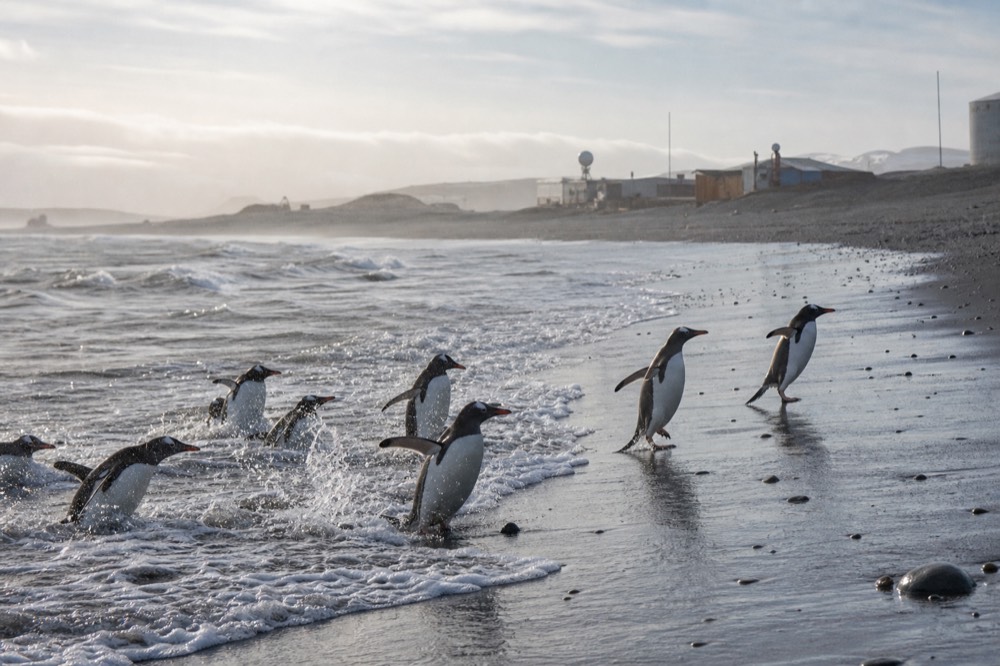
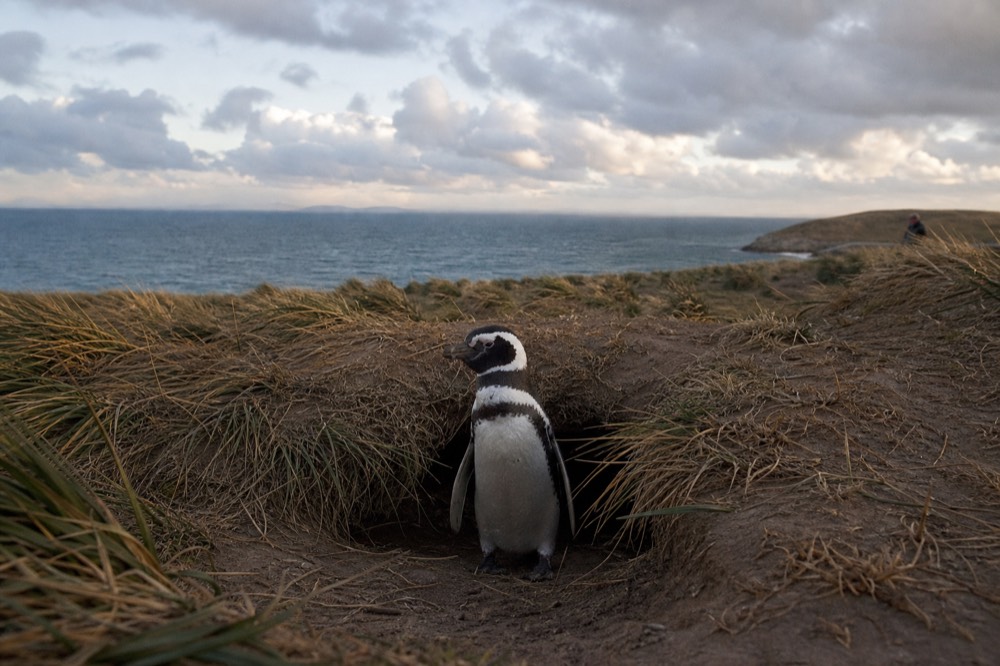
Gypsy Cove and Yorke Bay, both minutes from Stanley, cover Magellanic burrows and gentoos on the sand inside a 2 hour 30 minute loop. Bertha's Beach and Rookery Bay sit further out and pair into a four to five hour day. One gentoo colony is close enough to town for a one-hour run at $40.
The short loop is the port-day workhorse and it does not thin out the wildlife much: the Gypsy Cove burrows are occupied through the season, and the gentoos on the Yorke Bay sands are a real colony rather than a few stragglers.
Four or five hours strings three sites together instead of one, which is the difference between seeing penguins and comparing them. Bertha's Beach, Rookery Bay and Gypsy Cove covers gentoos, Magellanics and the coast between them, with lunch and entry fees inside the $234 per person price.
What Could Close A Colony At Short Notice?
Bird flu. Highly pathogenic avian influenza was confirmed in Falklands gentoos on 28 August 2025, and dead penguins at Sparrow Cove tested positive on 19 November 2025. Sites can close at short notice when detections occur, and operators reroute to unaffected colonies rather than cancelling the day.
This is live rather than historical, so the government's avian influenza updates are worth a look before you travel, and biosecurity now comes with the colony: stay on the route your guide sets. The islands are also expanding protected areas, with a 2026 consultation on ten new National Nature Reserves, and Falklands Conservation holding £3 million for New Island restoration to 2029.
For the site-by-site view, every penguin tour compared properly sets the nine options against each other, the full day at the king colony covers the drive, and which place earns the penguin capital label settles a question people ask constantly. You can also compare every bookable tour in one place.
Frequently Asked Questions
What month is best to see penguins in the Falkland Islands?
November to February. Gentoos, Magellanics and rockhoppers are on eggs or chicks through those months, and daylight is at its longest. King penguins at Volunteer Point are present every month of the year, so if kings are your priority the date matters far less than the road conditions on the day.
Can you see penguins in the Falklands all year round?
Kings, yes: the Volunteer Point colony holds birds in every month. The other four species are far less predictable outside October to March. Access is the real limit in winter, when cruise calls stop, daylight shrinks to a few hours and most day tours run with the season.
Are there penguin chicks on the colonies in January?
Yes. January and February are the chick-heavy weeks for gentoos, Magellanics and rockhoppers, with young birds growing fast and colonies at their loudest. At Volunteer Point the king colony carries birds at several stages at once because their cycle runs longer than a single summer.
Can bird flu close a penguin colony to visitors?
It can. Avian influenza was confirmed in gentoos on 28 August 2025 and at Sparrow Cove in November 2025, and individual sites can close at short notice. Operators reroute to unaffected colonies rather than cancelling, and many listings require at least 24 hours’ notice for a full refund. A same-day closure or missed call is governed by the specific product terms.
Which Falkland Islands tours go to the king penguins?
The Volunteer Point day is the one that reaches the kings: 6 hours 20 minutes from the Stanley jetty, from $398 per person, four passengers per 4x4 and roughly two hours each way over open camp. No shorter excursion reaches that colony, and no other site in the islands holds kings in those numbers.
Your Next Step
Choose Your Falklands Outing
Initial suggestion; use the optional controls to compare your plans.
Match The Outing To Your Plans
These controls compare the listed itineraries, not personal fitness or guaranteed departure availability. Confirm child ages, access needs and ship return arrangements before paying.
Volunteer Point King Penguins: A four-person 4x4, king-penguin colony time and lunch. 6h 20m; shared.
Bertha’s Beach & Gypsy Cove: Bertha’s Beach and Gypsy Cove in a guided five-hour outing, with a lunch pack. 5 hours; shared.
One-Hour Gentoo Colony Tour: Off-road transport to Yorke Bay gentoos in a short outing. 1 hour; shared.
Penguins & Stanley Sightseeing: Yorke Bay, Gypsy Cove and Stanley landmarks with a local guide. 2h 40m; shared.
Compare Your Actual Quotes
Use the same currency and comparable inclusions. A private vehicle is not automatically sold at a flat vehicle price; copy the final total for your party from the provider.
No listed outing matches these choices. Adjust or reset them; suitability that needs individual confirmation must be checked with the operator before booking.
Check your travel date before arranging the rest of your visit. A four-person 4x4, king-penguin colony time and lunch.
Volunteer Point King Penguins · 6h 20m
Rough off-road journey; moderate fitness. Not recommended in pregnancy. Full refund requires at least three full days notice.
Choose a date to check the published schedule. Availability and final price are confirmed on Viator.