Why Are There No Trees On The Falkland Islands?
No native trees grow in the Falklands, and the reasons are wind, peat and deep time. Here is the science, and what a treeless island means for wildlife.
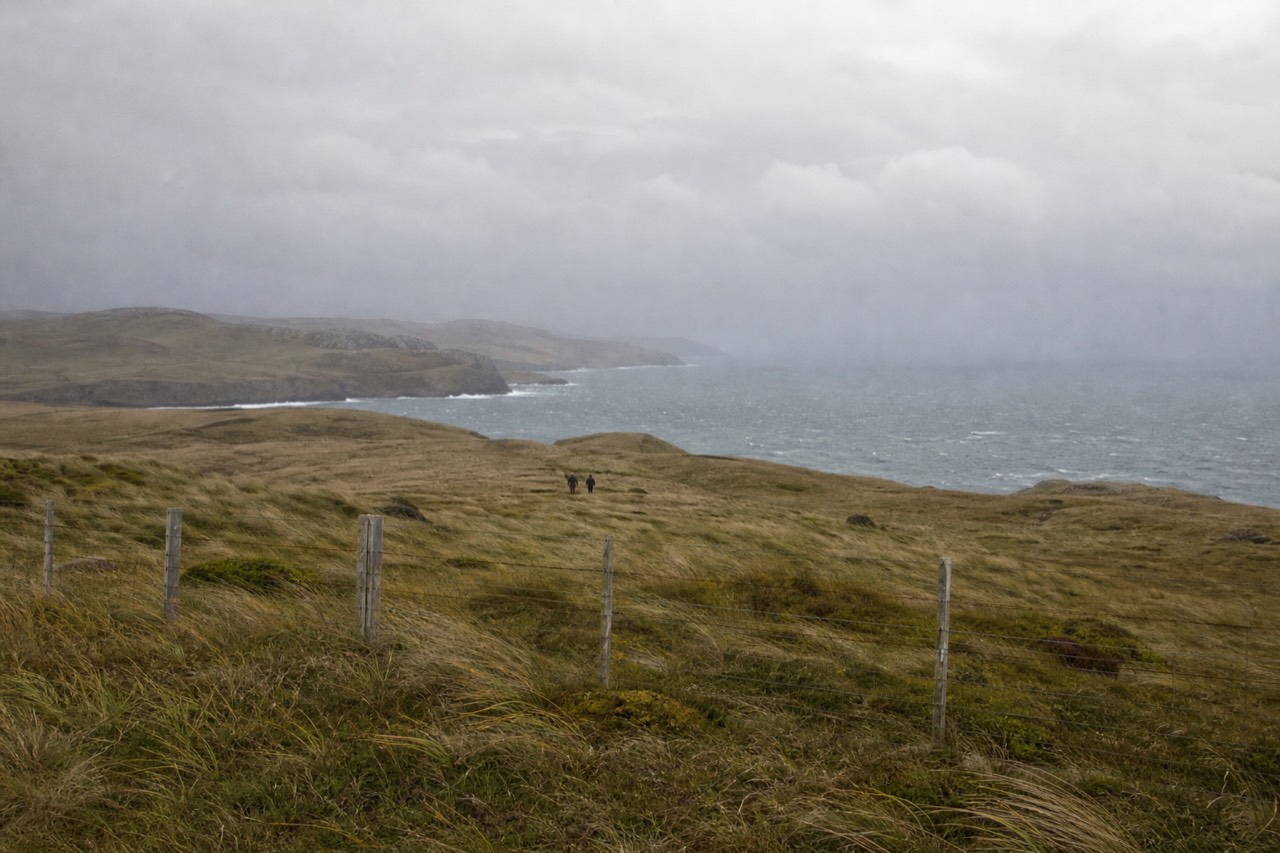
Look inland from almost anywhere in the Falklands and the eye keeps going. Nothing interrupts it. No windbreak, no copse in a valley, no line of pines along a fence, just grass, peat and the shine of standing water. Visitors notice it within minutes of leaving the jetty, and after the penguin questions it is the one guides field most.
Price comparisons are editorial snapshots from August 2026, except where updated. Final prices, reviews and booking terms can change; use your date and full party size on the provider’s page.
Why Are There No Trees On The Falkland Islands?
No tree species is native to the Falkland Islands. Persistent gale-force westerly winds, acidic peat-rich soils that are shallow and poor, subdued topography offering no shelter, and extensive past periglacial ground disturbance combine to stop woody plants establishing. Latitude is not the reason: forests grow at the same latitude in Patagonia.
Wind does most of the work. Stanley's average wind speed is 16 knots, roughly 30 km/h, and gales are common rather than exceptional, with the windiest stretch running May to September. That is a sustained load, not a storm that passes. A seedling clearing the grass canopy loses its growing tip to salt-laden air before it can build a trunk. Below ground the picture is no better: acidic peat, thin rooting depth and poor drainage, across a landscape with no ridge or gully deep enough to shelter anything.
Did Trees Ever Grow Here?
They did, a very long time ago. Fossil pollen, spores and wood recovered from mid to late Cenozoic deposits near Stanley record a floristically diverse rainforest dominated by Nothofagus and Podocarpaceae communities. The islands once carried forest. Conditions since then have shifted to a state that no longer sustains tree growth.
That evidence comes from palaeoecological work in the polar science literature, including a 2024 paper in Antarctic Science on the Falklands' ancient rainforest flora. It reframes the question neatly: this is not a place where trees never worked, it is a place where climate, soils and repeated cold-period ground disturbance closed the door and left it closed.
What Grows Instead Of Trees?
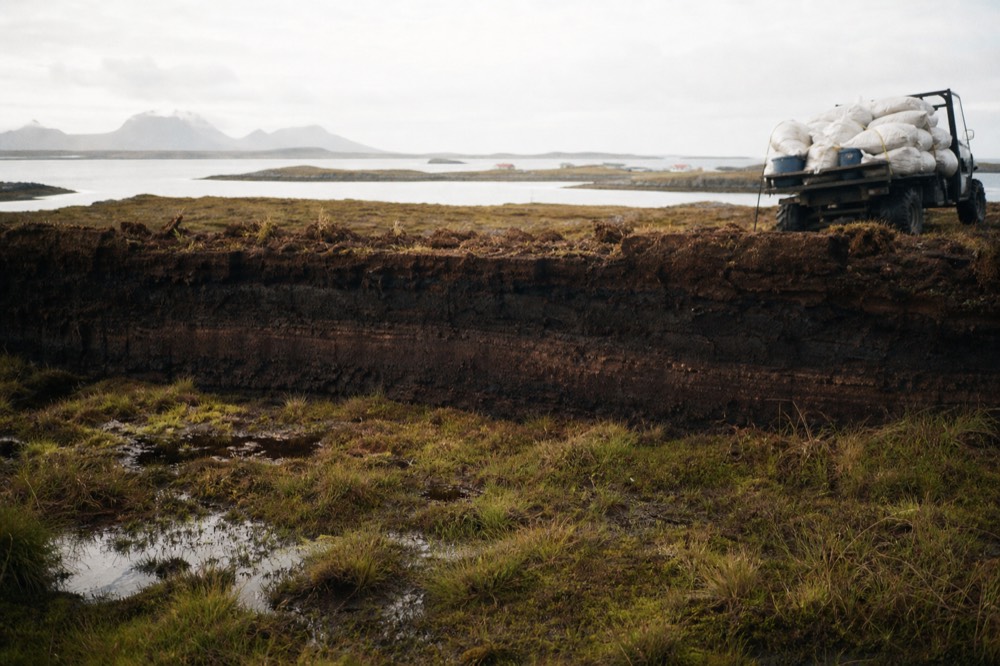
Grasses, dwarf shrubs and peat. Tussac grass is the native giant here, forming tall dense stands along the coasts and on offshore islands, high enough to walk into and lose sight of the sea. Everywhere else, low wind-cropped heath and grassland run to the horizon over acidic peat lying thick beneath the turf.
Tussac does what trees do elsewhere. It builds structure, traps warmth and gives smaller animals somewhere to hide, which is why coastal stands matter so much to seabirds and to the seals hauled out beneath them. The peat underneath is the archive of all this: a slow accumulation of unrotted plant material in cool, wet, oxygen-poor ground, the same process that stopped forest returning.
| Landscape feature | Why it is there | What it means on a tour day |
|---|---|---|
| Gale-force westerlies | Roaring Forties latitude, no landmass upwind | Stanley averages 16 knots, so windproof layers beat warm layers |
| Acidic peat soils | Cool, wet, oxygen-poor ground, slow decay | Soft going underfoot, vehicles keep to established tracks |
| Shallow rooting depth | Thin soil over rock and peat | Nothing woody self-seeds, sightlines stay open in all directions |
| Subdued topography | Low relief, no sheltering valleys | Weather arrives with no warning and clears just as fast |
| Tussac grass on the coast | Native tall grass adapted to salt and wind | The structure penguins, seabirds and seals shelter in |
| Open camp inland | Heath and grassland over peat | Wildlife visible at distance, no canopy to search |
What Does A Treeless Landscape Mean For Wildlife Watching?
It means you see almost everything. With no canopy and no scrub to hide in, penguins, upland geese, albatross on the wing and seals hauled out on the sand stay in plain view from a long way off. The emptiness that makes the islands look bare is exactly what makes the wildlife easy to find.
Bird watching here is not the patient business it is in a forest. You scan, you spot, you walk. That suits a naturalist-led format, which is what the private Eco Nature Tour is built around: 5 to 6 hours with a guide whose job is identification rather than commentary, from $419.92 per person, rated 5.0 across 9 reviews. Groups travelling together often prefer a private vehicle for the freedom to stop when something appears, so check dates and the live price against yours. There is more on what else is out there in wildlife beyond the penguin colonies.
Bertha's Beach is the other side of the same coin, a long stretch of white sand backed by grass rather than dune forest, with Rookery Bay and Gypsy Cove folded into a 4 to 5 hour small-group run that includes lunch, snacks, drinks and entry fees, from $234 per person.
Where Do You See This Landscape On A Short Visit?
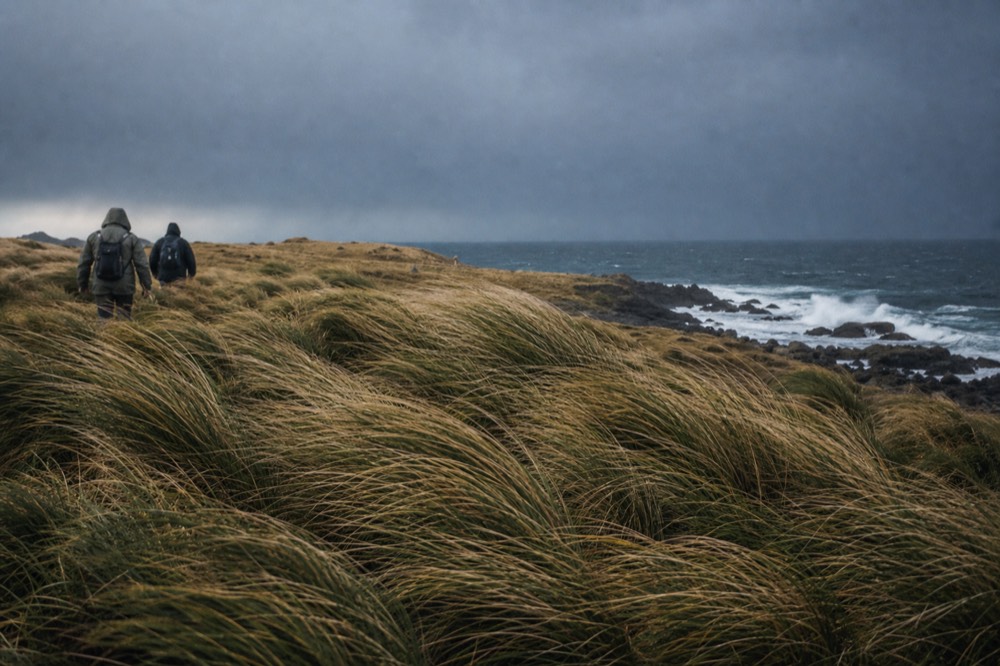
Within twenty minutes of Stanley. Gypsy Cove and Yorke Bay put treeless coast, Magellanic burrows and white sand inside a short drive of the jetty, and the road out towards Bertha's Beach crosses open camp the whole way. A 2 hour 30 minute tour covers the first comfortably.
The nearest version of the landscape is also the fastest to reach, which matters if your ship gives you a half-day. The Gypsy Cove, Yorke Bay and Stanley highlights run is capped at 15 people and starts from $135 per person. The walk-versus-drive choice at Gypsy Cove is covered separately, along with what else fills a day off the tour bus. For anything further out, a private vehicle is the practical answer, and the full lineup by tour type shows how the half-day and full-day options compare.
Conservation work on the vegetation is active too: Falklands Conservation secured £3 million in March 2026 for invasive species removal and wildlife reintroductions on New Island through 2029.
Questions People Ask About The Treeless Falklands
Are there any trees in the Falkland Islands?
No tree species is native to the islands. Persistent gale-force westerly winds, thin acidic peat soils, low relief with no natural shelter and a history of periglacial ground disturbance prevent woody plants establishing across open ground. The vegetation is grassland, heath and coastal tussac grass rather than woodland of any kind.
Did the Falkland Islands ever have forests?
Yes, in the deep geological past. Fossil pollen, spores and wood from mid to late Cenozoic deposits near Stanley record a floristically diverse rainforest dominated by Nothofagus and Podocarpaceae communities. Published palaeoecological research documents that flora, and shows conditions have since shifted to a state that no longer supports sustained tree growth.
What is tussac grass?
Tussac is the islands' native tall grass, forming dense pedestal-like clumps along coasts and on offshore islands. It grows high enough to walk into, and it does structurally what woodland does elsewhere: trapping warmth, binding soil and sheltering seabirds, penguins and hauled-out seals. Coastal tussac stands are a conservation priority in the islands.
How windy is it in the Falkland Islands?
Stanley's average wind speed is 16 knots, around 30 km/h or 8 m/s, and gales are a normal feature rather than a rare event. The windiest stretch of the year runs May to September. Windproof outer layers matter more than heavy insulation, since summer daily maxima average roughly 13-14°C in January and February.
Does the lack of trees make wildlife easier to see?
Considerably. With no canopy or scrub, penguins, upland geese and hauled-out seals stay visible at distance, and colonies can be scanned from a long way off. That open sightline is why short tours work so well here: a 2 hour 30 minute run from Stanley can deliver several species without any of the searching a forest demands.
Your Next Step
Choose Your Falklands Outing
Initial suggestion; use the optional controls to compare your plans.
Match The Outing To Your Plans
These controls compare the listed itineraries, not personal fitness or guaranteed departure availability. Confirm child ages, access needs and ship return arrangements before paying.
Private Guided Eco Nature Tour: An electric-car nature day with a conservation-experienced guide and smoko picnic. 5–6 hours; private.
Wildlife & Stanley Highlights: Two penguin sites, the Lady Elizabeth wreck and Stanley monuments. 2h 30m; shared.
Compare Your Actual Quotes
Use the same currency and comparable inclusions. A private vehicle is not automatically sold at a flat vehicle price; copy the final total for your party from the provider.
No listed outing matches these choices. Adjust or reset them; suitability that needs individual confirmation must be checked with the operator before booking.
Check your travel date before arranging the rest of your visit. An electric-car nature day with a conservation-experienced guide and smoko picnic.
Private Guided Eco Nature Tour · 5–6 hours
Outdoor coastal stops; specific access needs require operator confirmation. Child seats by arrangement.
Choose a date to check the published schedule. Availability and final price are confirmed on Viator.