Gypsy Cove And Yorke Bay: The Penguins Nearest Stanley
The closest penguins to Stanley, and the only ones a fit walker can reach without booking anything.
Short answer
Gypsy Cove and neighbouring Yorke Bay are the penguin sites nearest Stanley. Magellanics burrow into the banks above the cove; gentoos stand on the sand at Yorke Bay. Fit walkers reach them independently in a few miles each way, which costs a couple of hours of a short port day in each direction. The 2 hour 30 minute guided loop covers both plus Stanley from $135 per person.
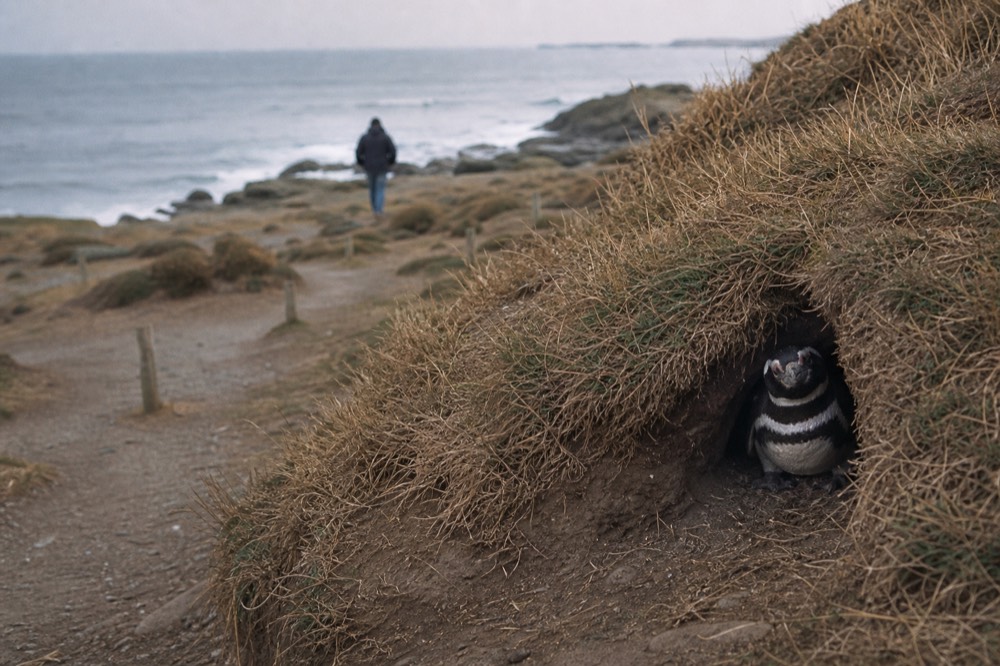
Walk the clifftop path above Gypsy Cove and the first thing you notice is that the ground is full of holes. Not rabbit holes. Magellanic penguins dig into the soft banks behind the beach and spend most of the day underground, so the cove reads as empty until something shuffles at the mouth of a burrow six feet from the path and stares at you with total indifference.
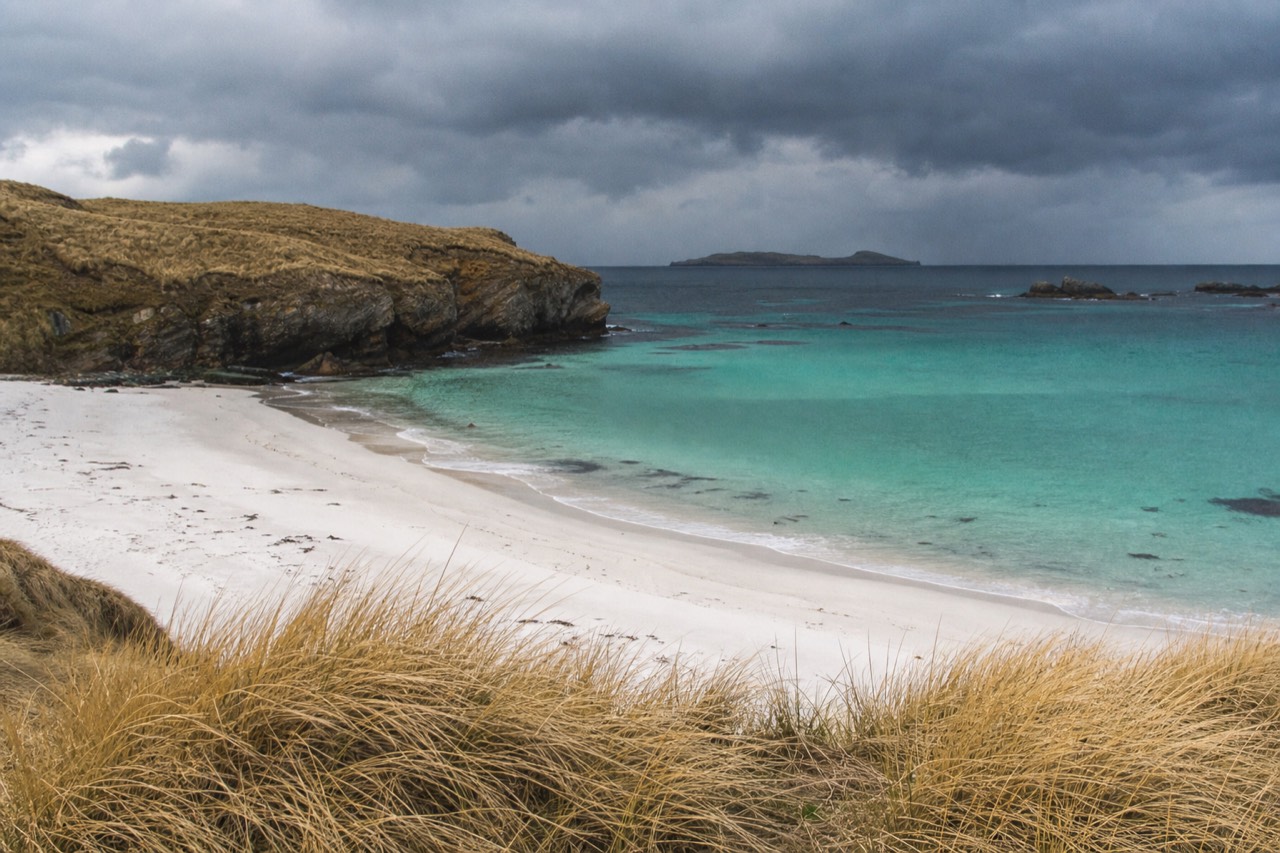
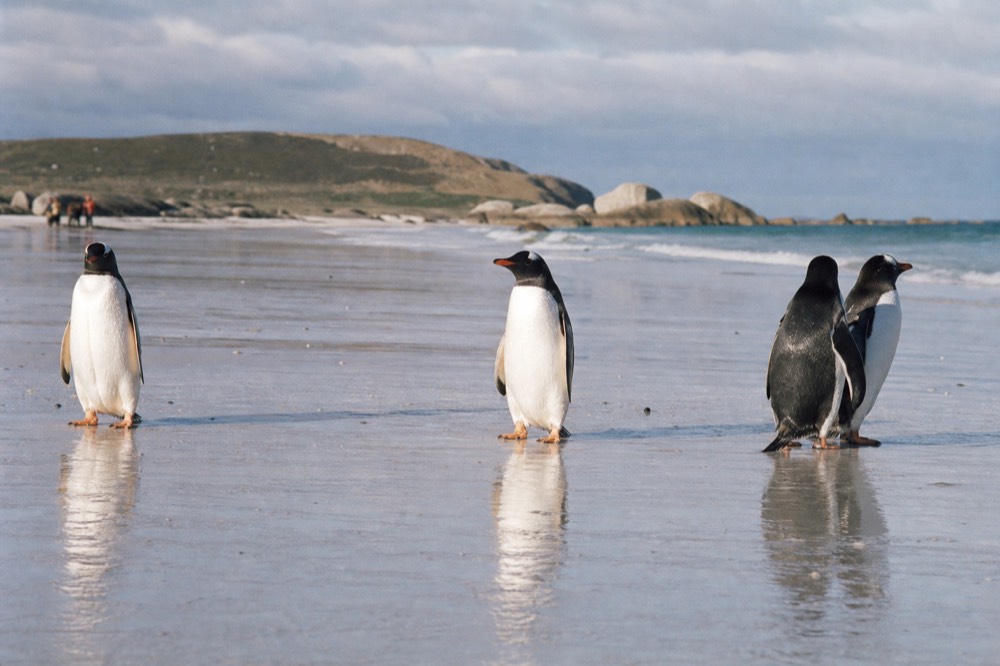
Below and around the headland, Yorke Bay runs out in a broad pale arc, and that is where the gentoos stand about on open sand. Two sites, two species, two entirely different ways of being a penguin, close enough together that a single short loop takes in both. That proximity is the whole story here, and it is why this pair of sites carries so much of the port-day traffic in Stanley.
Price comparisons are editorial snapshots from August 2026, except where updated. Final prices, reviews and booking terms can change; use your date and full party size on the provider’s page.
What Is At Gypsy Cove, And What Will You Actually See?
Gypsy Cove is a small sheltered cove north of Stanley with Magellanic penguins nesting in burrows in the banks above the beach. Yorke Bay next door is a broad sand beach where gentoos gather. Together they are the closest penguin sites to town, and the only ones reachable without a vehicle.
Magellanics are the least showy of the three species you can see on a Stanley day and arguably the most interesting to watch. They pair up, they dig, they come and go from the sea on their own schedule, and a colony looks like a field with a personnel problem. Early morning and evening are when the ground gets busy, which is worth knowing if your ship's schedule gives you any say in when you go out.
| Detail | Gypsy Cove | Yorke Bay |
|---|---|---|
| Main species | Magellanic, in burrows | Gentoo, on open sand |
| Terrain | Small cove, cliff path above | Broad flat beach |
| Viewing | From the path and headland, above the birds | Across the sand, at distance |
| Distance from Stanley | A few miles from the jetty | Adjacent to Gypsy Cove |
| Reachable on foot | Yes, for fit walkers | Yes, same route |
| Vehicle access | Yes, road most of the way | Yes |
| Facilities | None to speak of | None |
| On the 2h 30m guided loop | Yes | Yes |
There is a second reason people walk out here that has nothing to do with penguins. The headland gives you a working view of the harbour approaches, and the hulk of the Lady Elizabeth sits out on the water nearby, a big iron sailing ship that never left. Ships and birds in the same frame is a fair summary of what the Falklands offers a camera.
How Do Gypsy Cove And Yorke Bay Differ?
Gypsy Cove is where you look down at burrows and Magellanics; Yorke Bay is where you look across sand at gentoos. The cove is sheltered and intimate, the bay is exposed and enormous. Most visitors treat them as one destination because the walk from one to the other is short, but the birds and the viewing are genuinely different.
If you only have time to stand in one place, the cove is the better bet for close-range interest and the bay is better for the wide empty-beach photograph everyone comes home with. Doing both is the point of coming out here at all, and it is what the 2 hour 30 minute guided loop is built around: the burrows, the sand, the wreck and the Stanley landmarks, capped at 15 travelers. That listing is a newer one, so it holds a perfect 5.0 from only 2 reviews so far, and the route it runs is the long-established Stanley circuit rather than anything experimental.
| Species | On this headland | Nest type | When they are most visible | Where else you can reach them |
|---|---|---|---|---|
| Magellanic | Yes, Gypsy Cove banks | Burrow dug into soft ground | Early and late, moving to and from the sea | Rookery Bay, Volunteer Point |
| Gentoo | Yes, Yorke Bay sand | Open ground colony | Through the day, standing on the beach | Bertha's Beach, Volunteer Point |
| King | No | Open ground, territory held year-round | Any month of the tour season | Volunteer Point only |
| Southern rockhopper | No | Outer-island sites | Not reachable on a Stanley day | Outer islands, by air |
| Macaroni | No | Not on any Stanley itinerary | Not reachable on a Stanley day | Not offered on any bookable trip |
One piece of ground safety applies to the whole coast rather than these two sites specifically. Demining across the Falkland Islands was completed in 2020, but 1982 ordnance still occasionally washes up on beaches anywhere in the islands. The rule from the UK government's travel advice is absolute and simple: do not touch anything you find, and call 999. Signage on the coast is there to be obeyed rather than photographed.
Can You Walk To Gypsy Cove From The Cruise Jetty?
Yes, if you are a fit walker and the weather is behaving. It is a few miles from the jetty, on road and track rather than open camp, and the route is straightforward. The catch is time: doing it on foot both ways swallows a serious portion of a short port day before you have looked at a single penguin.
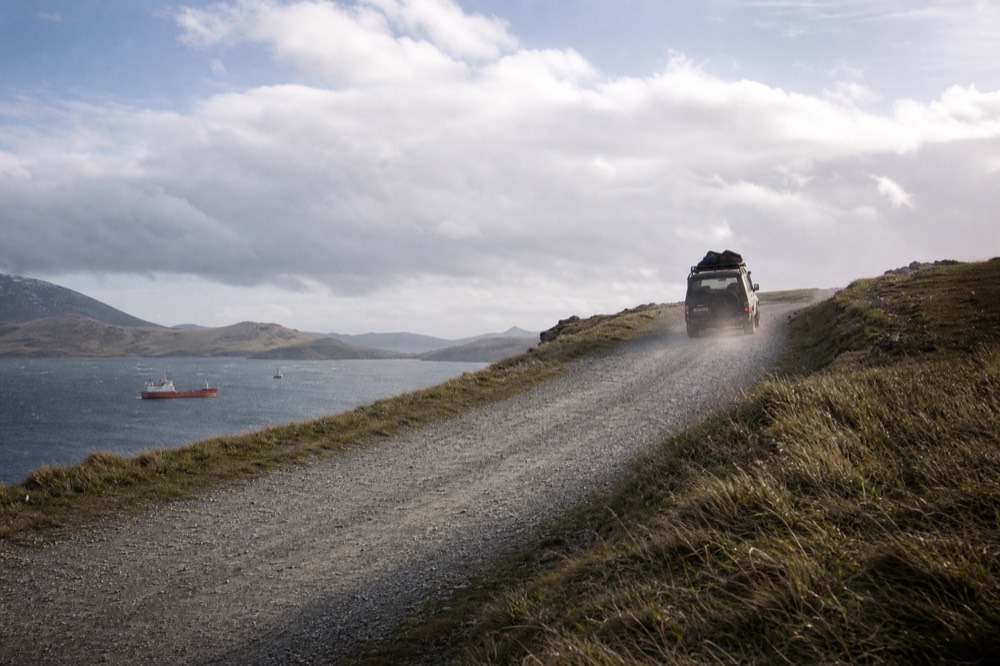
The walk is exposed for most of its length and there is no shelter and nothing to buy along the way, which follows directly from why the landscape holds no trees. Wind is the deciding factor rather than gradient. On a still January morning it is a pleasant outing; in a hard westerly it becomes work, and the return leg into the wind is the half that catches people out. Carry water, wear a shell that stops wind, and do not rely on your phone for the return timing.
The other consideration is your ship. Tendering is weather-dependent and sits outside anyone's schedule, so the moment your walk starts eating into your buffer you are gambling with the last tender rather than with your afternoon. Walking out and taking a taxi back is a legitimate middle path: Stanley Cabs operate in town and on the local roads, and that halves the time cost while keeping the free half of the experience.
Walking Or Booking: The Time And Cost Comparison
Walking is free and costs you hours. The $135 guided loop costs money and gives you back most of a port day, plus Stanley's landmarks and the shipwreck view in the same 2 hours 30 minutes. For anyone with four hours ashore or fewer, the tour is the better trade almost every time.
| Option | Cost | Time it takes | What you get | Best for |
|---|---|---|---|---|
| Walk out and back | Free | Most of a short port day | Gypsy Cove, Yorke Bay, the headland views, at your own pace | Long calls, fit walkers, good weather |
| Walk out, taxi back | Taxi fare only | Roughly half the walking time | Same sites, half the effort, a firm return time | Medium calls, mixed-fitness pairs |
| Gypsy Cove, Yorke Bay & Stanley Highlights | From $135 pp | 2h 30m, jetty to jetty | Both penguin sites, the Lady Elizabeth, Stanley landmarks, a guide | Short calls, first-time visitors |
| Shared Penguins & Stanley Sightseeing | From $139 pp | 2h 40m, tender landing stage | A penguin colony plus the Stanley circuit, 4.7 from 143 reviews | Ships tendering on a tight schedule |
| One-Hour Gentoo Colony Express | From $40 pp | 1h | One gentoo colony, transport both ways | Very short calls, tight budgets |
| Bertha's, Rookery Bay & Gypsy Cove | From $234 pp | 4 to 5h | Three sites, lunch, drinks and entry fees included | Six-hour-plus calls, land-based visitors |
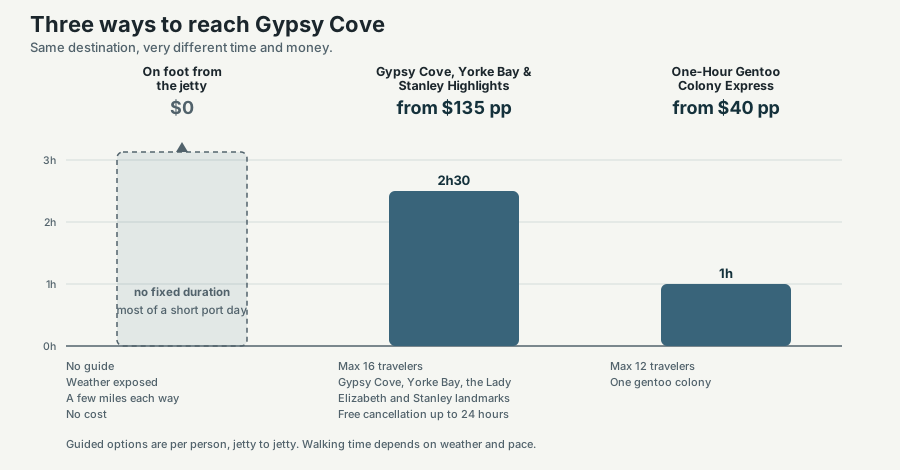
The $135 loop is the direct answer to this section's question. It is run by a local operator, capped at 15 travelers, and covers the two closest penguin sites, the wreck and the town circuit inside two and a half hours from the Jetty Visitor Centre. The listing is newer, so the review count is still small even though the rating is perfect, and the route itself is the classic Stanley one rather than anything experimental.
What Else Is Out On That Headland?
The Lady Elizabeth, a wrecked iron sailing ship, sits upright in the shallows within sight of the Gypsy Cove headland. The clifftops give long views over the harbour approaches, and the moorland behind holds upland geese, raptors and the occasional dolphin sighting offshore.
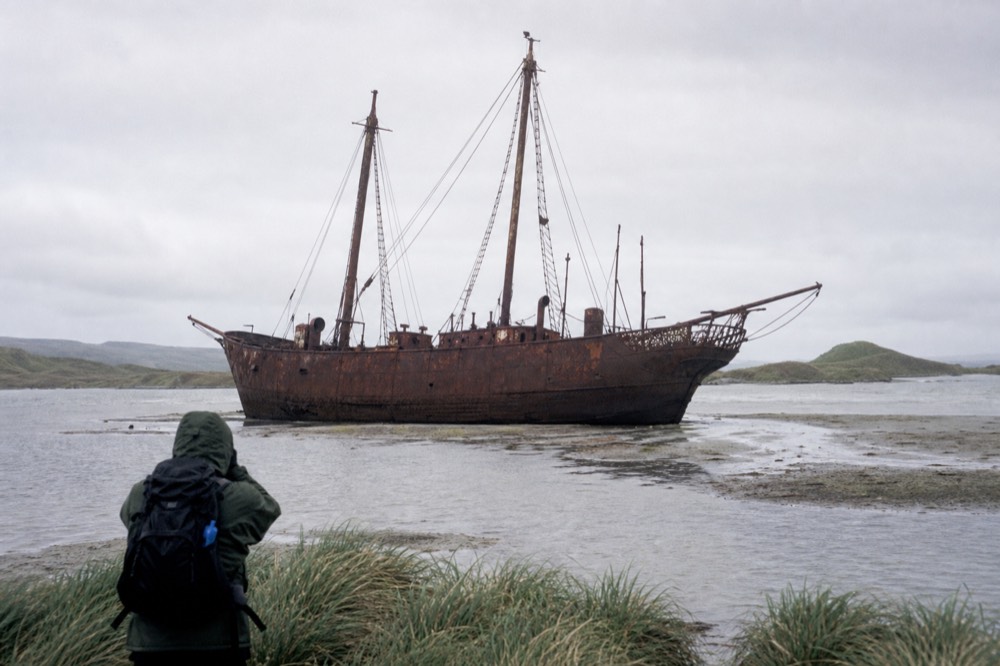
Stanley harbour is a graveyard of old sailing ships, hulks that were condemned here rather than repaired and simply left where they settled. The Lady Elizabeth is the most photogenic of them because it is still upright and still recognisably a ship. Guides on the short loops build a stop around it, which is a large part of why the $135 route reads as better value than its bare mileage suggests.
Beyond the wreck and the birds, the headland is simply a good place to stand. The wind comes off the South Atlantic with nothing in the way, the light changes every ten minutes, and the whole of Stanley sits behind you in its coloured metal roofs. For everything else the town itself holds, see Stanley, the two-street capital and things to do beyond the tour bus.
If the headland walk is more than you want but you still refuse to leave without seeing a penguin, there is a cheaper floor to this whole market. Simon's Tours runs a one-hour gentoo colony trip out of the Jetty Visitor Centre at $40 per person, using vehicles of up to six guests, with transport out and back inside the hour. It carries 4.8 across 26 reviews and a lowest-price badge.
What Else Lives On This Coast Besides Penguins?
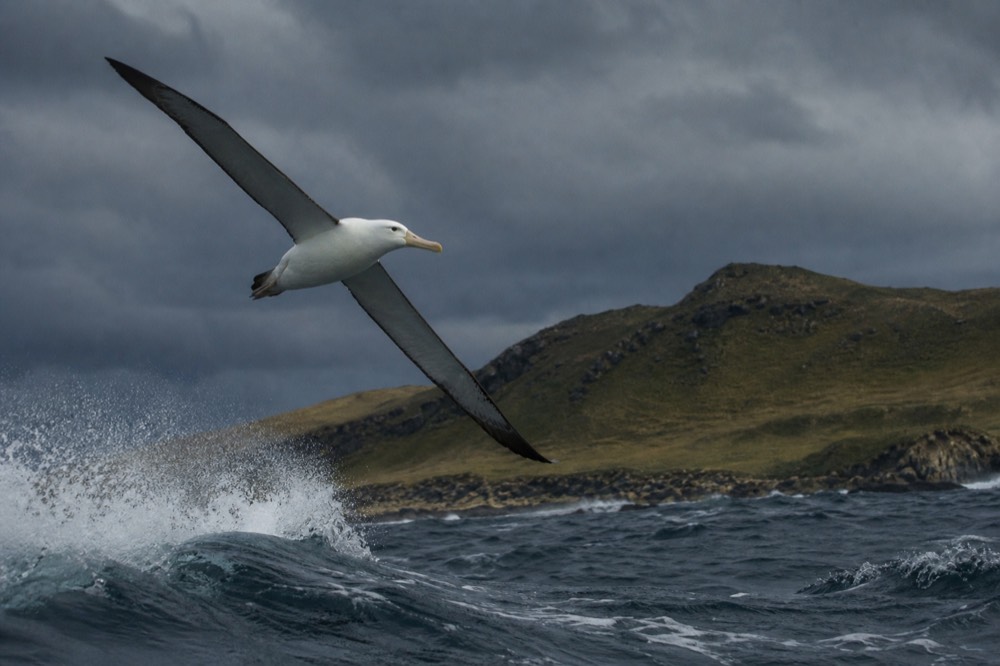
Upland geese and raptors work the moorland behind the headland, dolphins turn up offshore, and the harbour brings its own gulls and terns. The islands' headline seabird, the black-browed albatross, breeds on outer islands rather than here, but the Falklands hold roughly 70 percent of the world's breeding population, around 500,000 pairs.
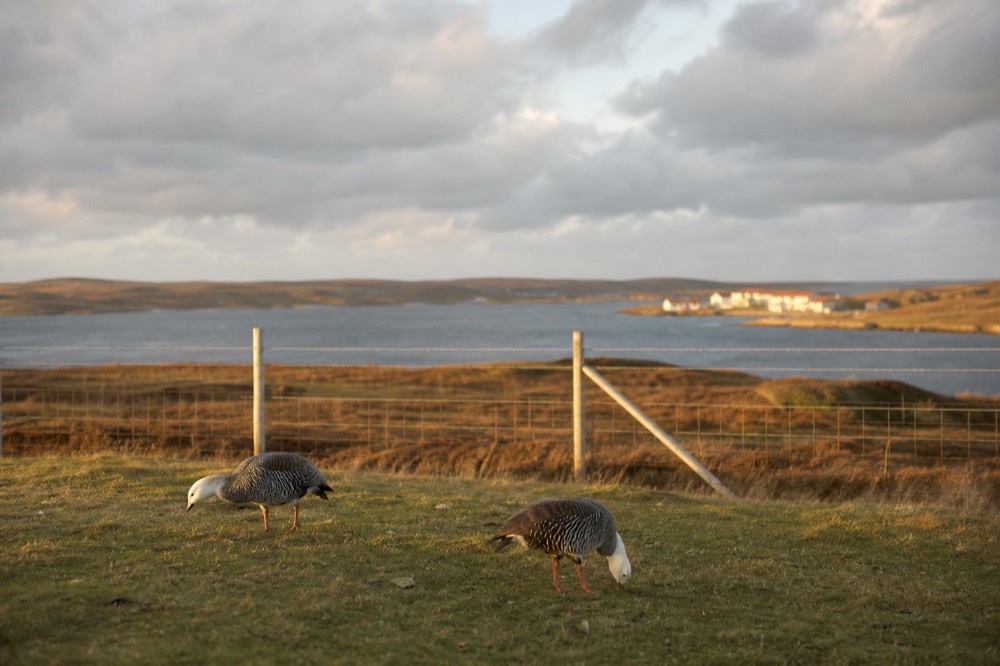
That albatross figure is the one to carry home from any Falklands trip, because it reframes the whole archipelago. This is not a place with a few nice birds on it. It is the single most important breeding ground on earth for a species with a global range, and the count is published by Falklands Conservation rather than a tourism office. Seeing those colonies means an outer-island flight, which is a land-based plan rather than a port-day one.
The same is true of the islands' marine mammals. Sea Lion Island supports the largest southern elephant seal population in the Falklands, with up to around 1,800 seals recorded at the site and roughly 200 pups produced a year in long-term studies. Neither of those things is visible from the Gypsy Cove path, and pretending otherwise would be doing you a disservice. What the headland does give you, free and within walking range of a cruise jetty, is two penguin species, a wreck and a lot of weather. The wider picture is set out in the wildlife beyond penguins.
How Does Gypsy Cove Fit Into A Port Day?
It is the site that works when nothing else does. At 2 hours 30 minutes the guided loop fits a four-hour call, and on foot it fills a long one. Every other penguin site in the islands demands more driving, and the king colony at Volunteer Point demands roughly seven hours ashore.
| Hours ashore | Gypsy Cove option that fits | What it rules out |
|---|---|---|
| Under 3 | Walk part-way, or take the 1h gentoo run at $40 | The full loop, the walk both ways |
| 3 to 4 | The 2h 30m guided loop, $135 | Multi-site days, Volunteer Point |
| 4 to 5 | The loop, then Stanley on foot afterward | Volunteer Point |
| 5 to 6 | The three-site day at $234, which finishes at Gypsy Cove | Volunteer Point |
| 7 or more | Anything, including the 6h 20m king day | Nothing |
| Land-based | Walk it properly, early or late for active burrows | Nothing |
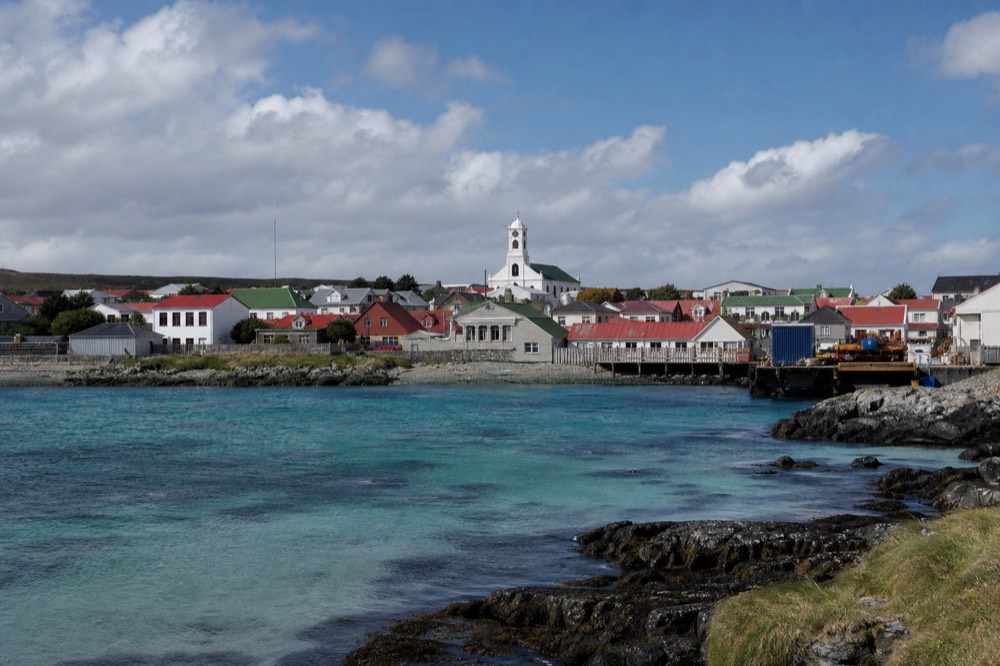
Notice what happens at the five-to-six-hour mark. That is where the three-site small-group day becomes the smarter buy, because it takes in Bertha's Beach and the Rookery Bay viewpoint before finishing at Gypsy Cove on the way back to town, and its price includes lunch, snacks, drinks and entry fees. Pickup is at the Tourist Board or the cruise jetty. You end up seeing Gypsy Cove anyway, having seen two other sites first, which is why it is worth a look at what the three-site day costs on your date before you settle for the short loop.
What Do You Give Up By Staying Close To Town?
Kings, mostly. Gypsy Cove and Yorke Bay deliver Magellanics and gentoos at close range for very little travel, but the king colony at Volunteer Point is four hours of driving away and no closer site substitutes for it. You also give up scale: these are intimate sites rather than the thousand-pair spectacle.
| Site | Species | Travel from Stanley | Bookable trip | From |
|---|---|---|---|---|
| Gypsy Cove | Magellanic | A few miles, road and track | Gypsy Cove, Yorke Bay & Stanley Highlights, 2h 30m | $135 pp |
| Yorke Bay | Gentoo | Same route as Gypsy Cove | Same 2h 30m loop | $135 pp |
| Bertha's Beach | Gentoo | Longer drive, made road | Three-site small-group day, 4 to 5h | $234 pp |
| Rookery Bay | Magellanic | Longer drive | Same three-site day | $234 pp |
| Volunteer Point | King, gentoo, Magellanic | About 2h each way, open camp | Volunteer Point King Penguin Day, 6h 20m | $398 pp |
That last row is the trade in a single line. Every extra hour of driving buys a bigger or rarer bird, and the curve gets steep at the end. Whether it is worth it depends entirely on how long your ship stays, which is the argument laid out in full in the penguin trips compared site by site and again from the timing angle in the best months to visit. If your call is long enough that kings are genuinely on the table, the 6 hour 20 minute overland day is the only route to them and it holds the largest review base of any trip in the islands.
What Should You Take, And When Should You Go?
A shell that stops wind, boots that handle wet sand and peat, and layers you can shed. Weather here changes inside an hour and the exposure on the headland is total. For active burrows and better light, early morning or late afternoon beats the middle of the day.
| Item | Why it matters here | Walking | Guided loop |
|---|---|---|---|
| Windproof shell | The headland has no shelter at all | Essential | Essential |
| Waterproof boots | Wet sand, peat, tussac that holds water | Essential | Useful |
| Water and a snack | Nothing is sold along the route | Essential | Not needed |
| Zoom lens | Burrows are viewed from the path, at distance | Useful | Useful |
| Hat with a chin strap | Loose hats do not survive out there | Useful | Useful |
| Cash in sterling or Falkland pounds | Cards are spreading but not universal in town | Useful | Useful |
| A firm turnaround time | The last tender does not wait | Essential | Handled by the operator |
Money deserves a word of its own because visitors get caught by it. The Falkland pound is pegged one to one with sterling, UK notes are accepted, and there is exactly one ATM in the islands, at the Stanley petrol station. Cash advances are available at the bank in Stanley and grocery shops will usually do cashback. Card acceptance is spreading but it is not universal, so a walk into town with nothing but a phone is optimistic.
The visiting rhythm here follows the October-to-March cruise calendar. The Falkland Islands Tourist Board publishes practical site information, and the breeding rhythm that decides how busy these two sites feel is set out in which month suits each penguin species. If you want the wider picture of what the day costs once tours, food and transport are added up, what a Falklands trip costs covers it, and the sites reached only by ship-arranged excursions are in Bluff Cove and the other penguin beaches. Everything bookable sits together on the shore-excursion lineup.
Frequently Asked Questions
Can you walk to Gypsy Cove from Stanley?
Yes. It is a few miles from the jetty on road and track, well within reach of a fit walker in reasonable weather. The route is exposed with no shelter and nothing to buy, so carry water and a windproof layer. On a short port call the walk both ways consumes most of your time ashore, which is the real cost.
What penguins are at Gypsy Cove?
Magellanic penguins, which nest in burrows dug into the banks above the beach and are most active early and late in the day. Gentoos gather on the sand at neighbouring Yorke Bay, a short distance along the same headland. King penguins are not present at either site; the nearest king colony is Volunteer Point, about two hours each way by 4x4.
How much does a Gypsy Cove tour cost?
From $135 per person for the 2 hour 30 minute loop covering Gypsy Cove, Yorke Bay, the Lady Elizabeth shipwreck and the Stanley landmarks, capped at 15 travelers with free cancellation up to 24 hours before. A four-to-five-hour small-group day taking in Bertha's Beach and Rookery Bay before finishing at Gypsy Cove runs from $234 per person with lunch included.
Is Gypsy Cove worth visiting on a short cruise call?
It is the site that fits a short call best. The guided loop runs 2 hours 30 minutes jetty to jetty, which works with four hours ashore, and it covers two penguin species plus the town. Anything further afield needs five hours or more, and the king colony at Volunteer Point needs roughly seven.
Are there landmines at Yorke Bay?
Demining across the Falkland Islands was completed in 2020. Unexploded ordnance from 1982 still occasionally washes up on beaches anywhere in the islands, and the official advice is to never touch anything you find and to call 999. Obey coastal signage, stay on marked paths, and treat anything unfamiliar on the sand as a matter for the authorities.
What is the shipwreck near Gypsy Cove?
The Lady Elizabeth, a wrecked iron sailing ship that was condemned in Stanley rather than repaired and never left. It sits upright in shallow water within sight of the Gypsy Cove headland and is a standard stop on the short guided loops out of town, including the 2 hour 30 minute route from $135. Stanley harbour holds several other old hulks besides it.
Your Next Step
Choose Your Falklands Outing
Initial suggestion; use the optional controls to compare your plans.
Match The Outing To Your Plans
These controls compare the listed itineraries, not personal fitness or guaranteed departure availability. Confirm child ages, access needs and ship return arrangements before paying.
Wildlife & Stanley Highlights: Two penguin sites, the Lady Elizabeth wreck and Stanley monuments. 2h 30m; shared.
Penguins & Stanley Sightseeing: Yorke Bay, Gypsy Cove and Stanley landmarks with a local guide. 2h 40m; shared.
One-Hour Gentoo Colony Tour: Off-road transport to Yorke Bay gentoos in a short outing. 1 hour; shared.
Private Guided Eco Nature Tour: An electric-car nature day with a conservation-experienced guide and smoko picnic. 5–6 hours; private.
Volunteer Point King Penguins: A four-person 4x4, king-penguin colony time and lunch. 6h 20m; shared.
Bertha’s Beach & Gypsy Cove: Bertha’s Beach and Gypsy Cove in a guided five-hour outing, with a lunch pack. 5 hours; shared.
Compare Your Actual Quotes
Use the same currency and comparable inclusions. A private vehicle is not automatically sold at a flat vehicle price; copy the final total for your party from the provider.
No listed outing matches these choices. Adjust or reset them; suitability that needs individual confirmation must be checked with the operator before booking.
Check your travel date before arranging the rest of your visit. Two penguin sites, the Lady Elizabeth wreck and Stanley monuments.
Wildlife & Stanley Highlights · 2h 30m
Sand and uneven ground; moderate fitness. Not recommended in pregnancy or with spinal or cardiovascular conditions.
Choose a date to check the published schedule. Availability and final price are confirmed on Viator.