Falklands Battlefield Tours: The 1982 Sites You Can Visit Today
The 1982 ground is quiet now, working camp with memorials standing in it, and most of what people come to see sits within a few hours of Stanley.
Short answer
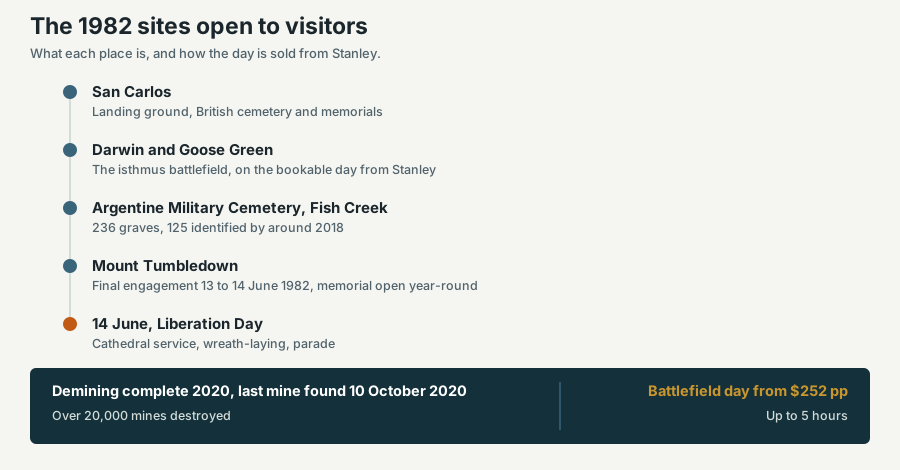
Battlefield visits from Stanley centre on Darwin and Goose Green, with the Argentine Military Cemetery at Fish Creek holding 236 graves. San Carlos adds the landing ground and a British cemetery, and Mount Tumbledown marks one of the final engagements of 13 to 14 June 1982. One bookable day covers Darwin, Goose Green and the cemetery from $252 per person, up to five hours, with Stanley pickup.
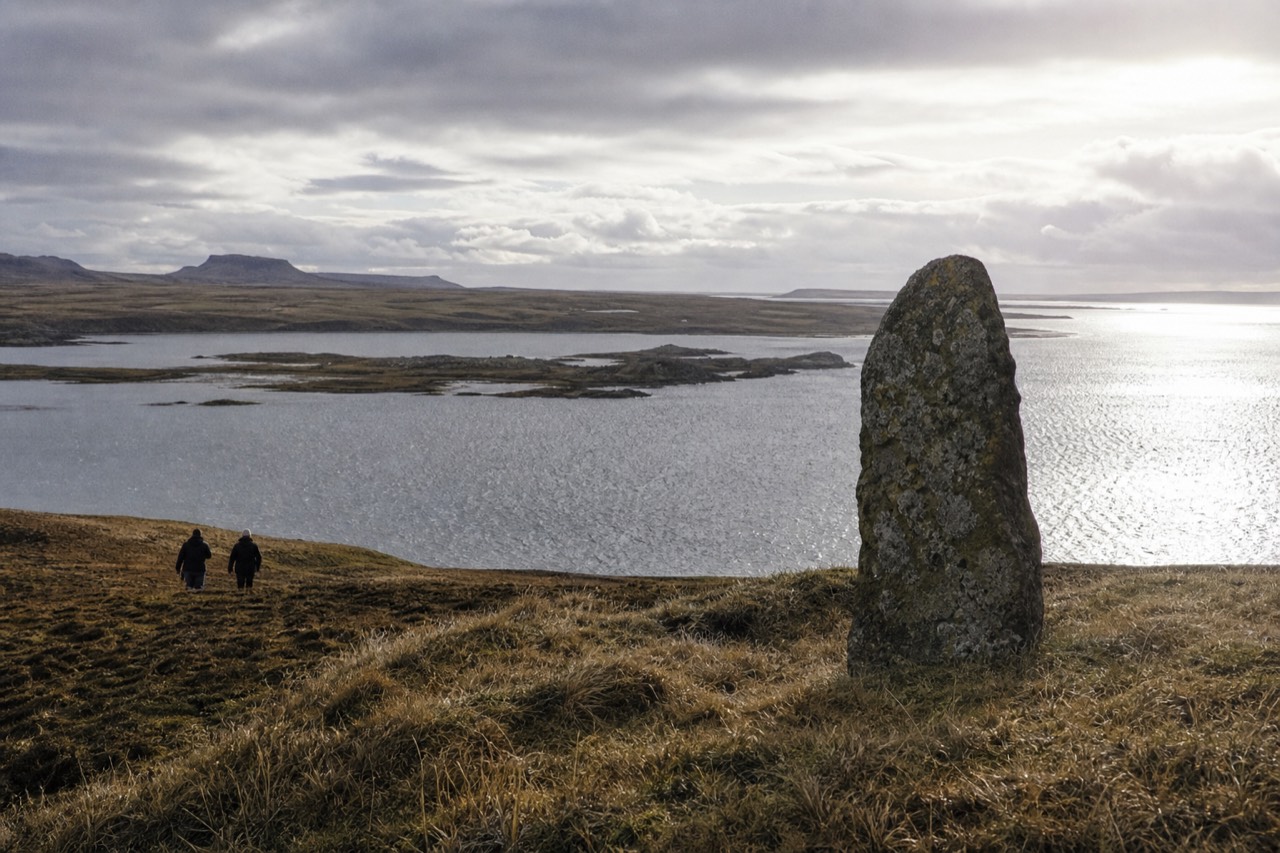
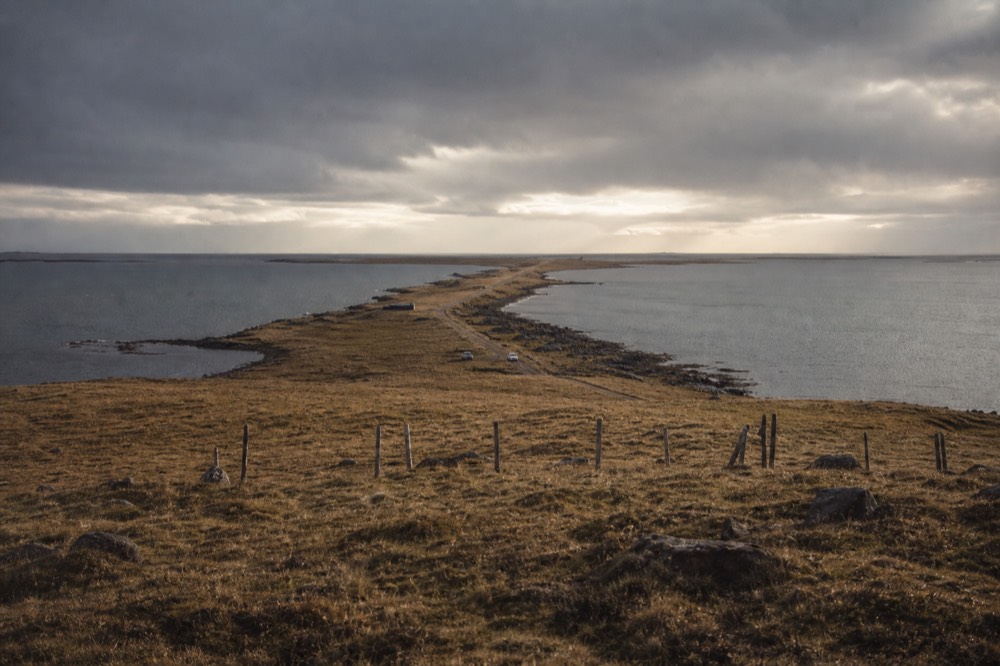
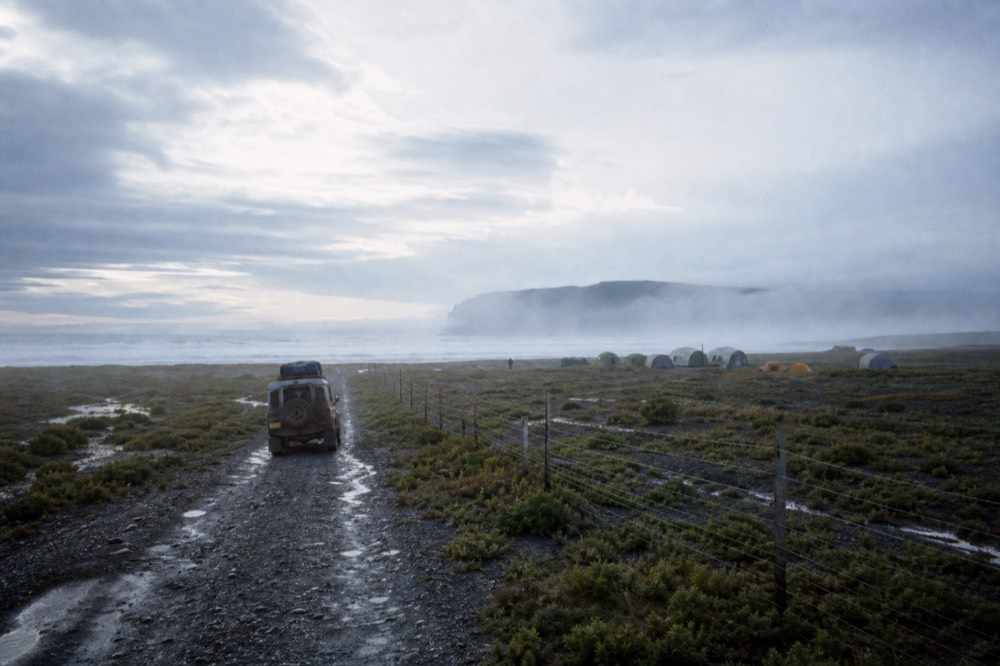
The wind at Darwin comes off the water in one long unbroken push, and there is very little on the isthmus to slow it down. Brown grass, dark peat, wire fences sagging between posts, sheep working their way along a slope. Then a plain white enclosure on the rise above Fish Creek, graves in ordered rows, and the whole reason people drive two hours out of Stanley to stand in the cold and say nothing for a while.
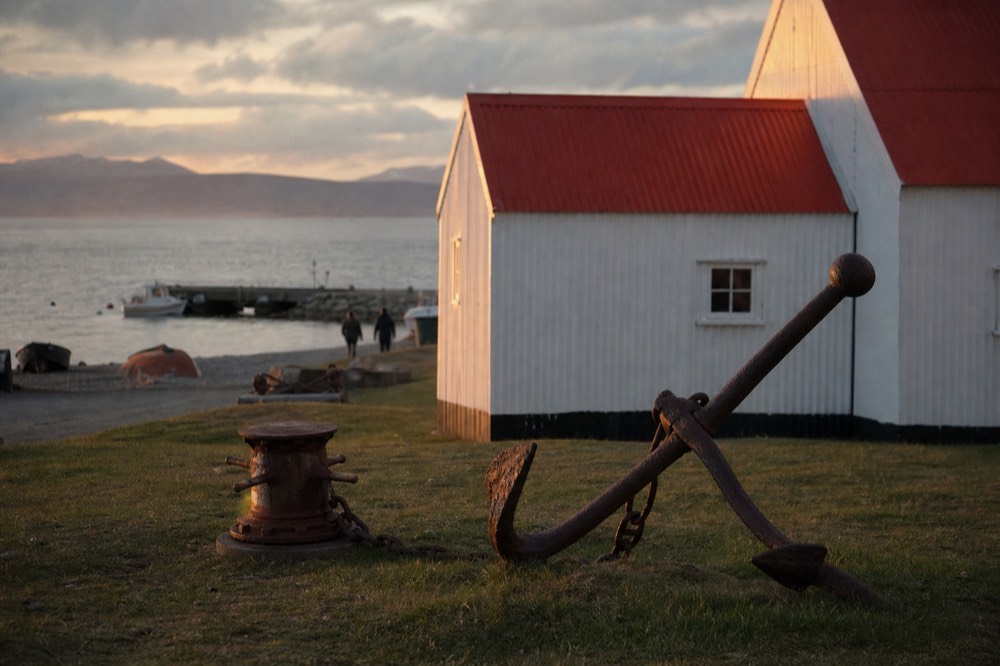
The 1982 sites are not a museum trail. They are farmland, moorland and settlement, still lived in and worked, with memorials placed where things happened. That shapes everything about how you visit: what you can reach in a day, what you should and should not touch, and how you conduct yourself once you are there.
Price comparisons are editorial snapshots from August 2026, except where updated. Final prices, reviews and booking terms can change; use your date and full party size on the provider’s page.
Which 1982 Sites Can You Actually Visit Today?
Four pieces of ground carry the story: San Carlos, where the landings came ashore; Darwin and Goose Green, where the fighting for the settlement took place; the Argentine Military Cemetery at Fish Creek; and Mount Tumbledown near Stanley, one of the final engagements on 13 to 14 June 1982. Stanley itself holds the memorials and the museum.
Access falls into two tiers. Darwin, Goose Green and the cemetery sit together and can be covered in a single day out of Stanley by guided 4x4, which is what the bookable battlefield day does. San Carlos lies further off and generally belongs to longer itineraries, either a very full day or an overnight stay out in camp near Darwin or Goose Green. Mount Tumbledown is close enough to Stanley that it can be built into a town-based day, and its memorial is open at all hours, all year.
Nothing here is ticketed or gated in the way a European battlefield park would be. There is no visitor centre at Goose Green, no audio guide, no café. What you get instead is the shape of the land, which turns out to matter more than any display board: the narrowness of the isthmus, the total absence of cover, the way the ground rises to a ridge and then drops away again. People who arrive expecting an attraction come away talking about the emptiness.
| Site | What happened there in 1982 | What stands there today | How it is reached |
|---|---|---|---|
| San Carlos, San Carlos Water | The landing ground where British forces came ashore | British military cemetery and memorials above the water | Guided 4x4 from Stanley, or an overnight out near Darwin or Goose Green |
| Darwin | Settlement at the neck of the isthmus, alongside the fighting for Goose Green | Memorials and the road down to the cemetery | Included on the bookable day from Stanley |
| Goose Green | The battle for the settlement, on open ground with almost no cover | The battlefield itself, still worked as camp, with memorials | Included on the bookable day from Stanley |
| Argentine Military Cemetery, Fish Creek | Burial ground for Argentine combatants of the conflict | 236 graves, maintained, a standard stop on battlefield tours | Included on the bookable day from Stanley |
| Mount Tumbledown | One of the final engagements, 13 to 14 June 1982 | Memorial on the hill, open at all times year-round | Near Stanley; also written into some multi-day battlefield itineraries |
| Stanley memorials | Site of the surrender that ended the occupation | Liberation Memorial on the waterfront, Christ Church Cathedral | On foot in town |
| Historic Dockyard Museum, Stanley | Not a battle site | Galleries covering island history, including 1982 | On the Stanley waterfront |
If you want the wider picture of how a day in town fits around all this, Stanley's two streets and what fills a day there covers the walkable side.
What Is The Argentine Military Cemetery At Darwin?
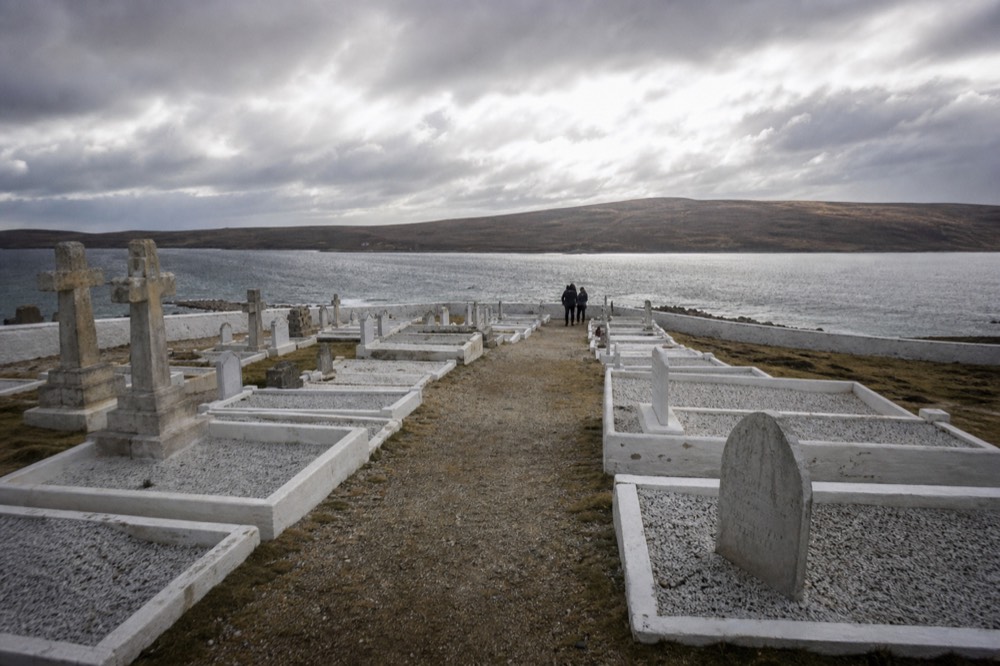
The Argentine Military Cemetery sits at Fish Creek on East Falkland, near Darwin, and holds the graves of 236 Argentine combatants. It is a maintained war cemetery and a standard stop on battlefield tours. Identification work run with the ICRC, using DNA and cooperation between the United Kingdom, the Falklands and Argentina, had positively identified 125 of those buried by around 2018.
That identification programme changed what the place is. Families who for decades had a grave marked only as an unnamed soldier can now visit a named one. One documented repatriation followed, that of Lieutenant Luis Castagnari in December 2018. No further identifications or repatriations have been announced in the sources covering 2025 and 2026.
Conduct yourself the way you would at any war cemetery, because that is exactly what it is. Voices down. Stay on the paths between the rows. If a family is there, and they sometimes are, give them the whole place and wait in the vehicle. Photography of the site as a whole is normal on these tours; photography of people grieving is not.
Guides handle the naming carefully and so should you. Argentina calls the islands the Islas Malvinas, and you will see that name on wreaths and plaques at the cemetery. Noting it is simply accurate. The dead of both nations are buried in these islands, and the courtesy owed at Fish Creek is the same courtesy owed at the British cemetery above San Carlos Water.
How Does The Bookable Battlefield Day From Stanley Run?
Premium Penguin Tours runs the one day that packages the main sites: Darwin, the Goose Green battlefield and the Argentine cemetery, with pickup in Stanley. It costs from $252 per person, runs up to five hours, and can be cancelled free up to 24 hours before. The listing is new and carries no reviews yet, so there is no rating to judge it by.
Five hours is the honest ceiling rather than a promise. The drive out to the isthmus eats a large share of it, on gravel and camp tracks rather than sealed road, and the time on the ground is spent walking short distances between points a guide chooses. The vehicle is a 4x4 because the route requires one. Dress for weather that changes inside an hour and bring more layers than the temperature suggests, because standing still on an exposed slope in wind is a different proposition from walking.
The no-reviews point deserves plain treatment. A new listing means no accumulated feedback, not a poor operator: the same company runs the small-group Bertha's Beach, Rookery Bay and Gypsy Cove day, which sits at a 5.0 rating on a single review, and that day includes lunch, snacks, drinks and entry fees. If a review count is what makes you comfortable booking, the shared Stanley sightseeing option at 4.7 across 143 reviews is the busier alternative, though it is a town and wildlife tour rather than a battlefield one.
| The battlefield day | Detail |
|---|---|
| Operator | Premium Penguin Tours |
| Price | From $252 per person |
| Duration | Up to 5 hours |
| Sites covered | Darwin, Goose Green battlefield, Argentine Military Cemetery |
| Pickup | Stanley |
| Vehicle | 4x4, guided |
| Cancellation | Free up to 24 hours before |
| Rating and reviews | New listing, no reviews yet |
Can You Fit Goose Green Into A Cruise Ship Day?
Only if your ship gives you a genuinely long day ashore. The battlefield tour runs up to five hours, and that clock starts after you have tendered in and found your pickup. With six hours ashore it works with little margin. With four or five, it does not, and the Stanley memorials plus the museum are the better answer.
Most ships tender to the public jetty rather than berthing, and small expedition vessels may go alongside at FIPASS. Tendering adds time at both ends, and the amount it adds depends on sea state, the number of ships in the harbour that morning, and your place in the queue. Build a buffer that assumes the return tender line is longer than the outbound one.
The 2025-26 season was forecast at roughly 72,500 cruise passengers across about 53 vessels and around 140 calls, up slightly on the previous season's total of more than 71,300. On the busiest mornings that volume is concentrated into a few hours in a town of a few thousand people, and the four-wheel-drive fleet is finite. Booking the battlefield day ahead is the only way to hold a seat on it.
| Hours ashore | What fits comfortably | What to skip |
|---|---|---|
| 3 hours or less | Liberation Memorial, cathedral, whalebone arch, Historic Dockyard Museum on foot | Anything requiring a vehicle out of town |
| 4 hours | Town memorials plus a short wildlife run such as the 1-hour gentoo colony express or the 2h30m Gypsy Cove and Stanley highlights | The battlefield day |
| 5 hours | The 2h40m shared penguins and Stanley sightseeing, then museum time | The battlefield day, unless tenders start very early |
| 6 hours or more | The up-to-5-hour battlefield day, with the rest as buffer | Trying to add penguins on top of it |
| Overnight or land-based | Battlefield day plus San Carlos on a separate outing | Nothing forced |
The mechanics of tendering, jetty pickups and how long the queue really runs are covered in how a Stanley port day actually works, and if you are still choosing dates, which months the season runs sets the wider calendar.
What Is There To See At San Carlos And Mount Tumbledown?
San Carlos holds the British military cemetery and memorials above San Carlos Water, on the ground where the landings came ashore. Mount Tumbledown, near Stanley, marks one of the final engagements of the campaign, fought on 13 and 14 June 1982, and its memorial is open at all times, all year round.
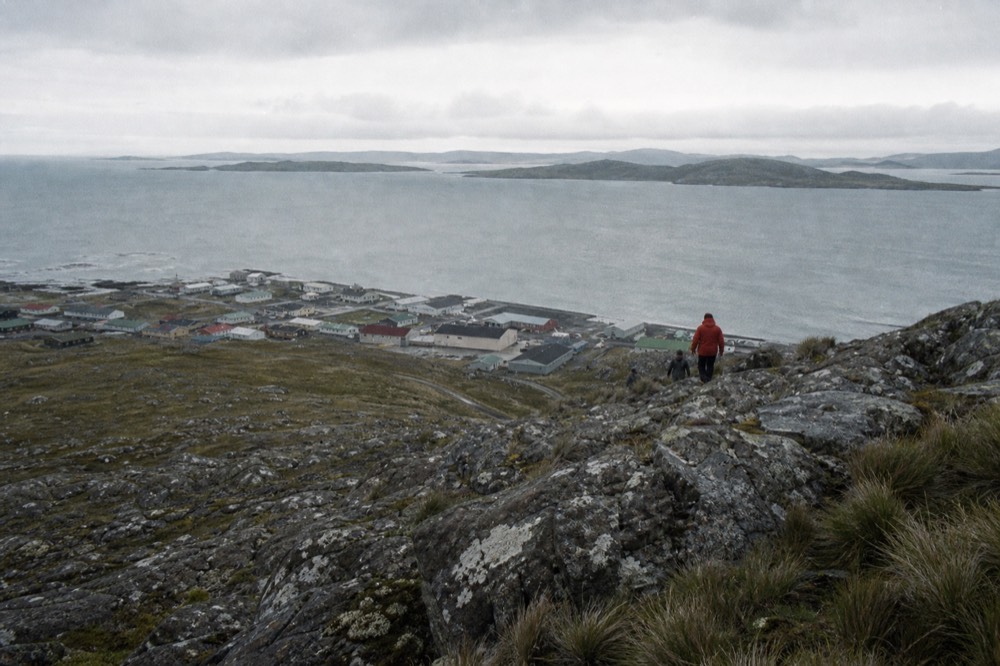
The two sites sit at opposite ends of the land campaign, and visiting both is the clearest way to understand its shape. San Carlos is the beginning: a sheltered stretch of water, hills on either side, a small walled cemetery looking down over it. Tumbledown is the end, rock and scree on the high ground west of Stanley, close enough that on a clear day the painted roofs of the town are laid out below you. Between those two points lie the isthmus and everything that happened on it.
San Carlos needs a substantial road journey. The private 1982 War Memorials tour explicitly includes Blue Beach cemetery in a 5–6 hour itinerary from Stanley, alongside Fitzroy, Goose Green and Darwin. Cruise passengers must still confirm that the complete route fits their tender and return window.
Tumbledown is the opposite. It is near town, it costs nothing to stand at, and it has no opening hours to work around. What it does have is exposure: it is a hill in a place where the wind rarely stops, so the footing and the weather deserve respect even though the drive is short. The tourist board's own Mount Tumbledown memorial listing is the plain reference for it.
Which Memorials And Museums In Stanley Fill In The Story?
Stanley holds the Liberation Memorial on the waterfront, Christ Church Cathedral where the annual thanksgiving service is held, and the Historic Dockyard Museum, whose galleries cover island history including 1982. In the winter period from 1 April to 30 September 2026 the museum is closed Mondays, open 10:00 to 16:00 Tuesday to Friday, and 13:00 to 16:00 at weekends.
The museum is the piece most people underrate. It is not a war museum, and that is the point: 1982 sits inside a much longer story of settlement, sheep, shipwrecks and the South Atlantic, which is exactly the context that makes the battlefield sites legible. Summer hours from 1 October 2026 follow a similar weekday pattern, with extensions possible on cruise-ship days, Mondays included. Check before you walk up if your day is tight, because that Monday closure catches people out in the off-season.
The waterfront memorials take under an hour on foot and cost nothing. Because the museum and the memorials sit within a few hundred metres of the jetty, they are the reliable fallback on a short port day when the roads out to camp are more than your schedule can carry.
| Historic Dockyard Museum | Monday | Tuesday to Friday | Saturday and Sunday |
|---|---|---|---|
| 1 April to 30 September 2026 | Closed | 10:00 to 16:00 | 13:00 to 16:00 |
| 1 October 2026 to 31 March 2027 | May open on cruise-ship days | Similar weekday pattern | Similar, with cruise-day extensions possible |
Full details and any in-season changes sit on the Historic Dockyard Museum listing. For everything else that fills an afternoon in town, what to do in Stanley beyond the tour bus has the rest.
Is The Ground Safe Now That Demining Is Finished?
Yes. The Falkland Islands were declared landmine-free after the UK-funded clearance programme finished in 2020, with the last mine found on 10 October 2020 and handover events that November. More than 20,000 mines were destroyed and a large amount of land returned to use. Ordnance from 1982 still washes up occasionally: never touch it, and call 999.
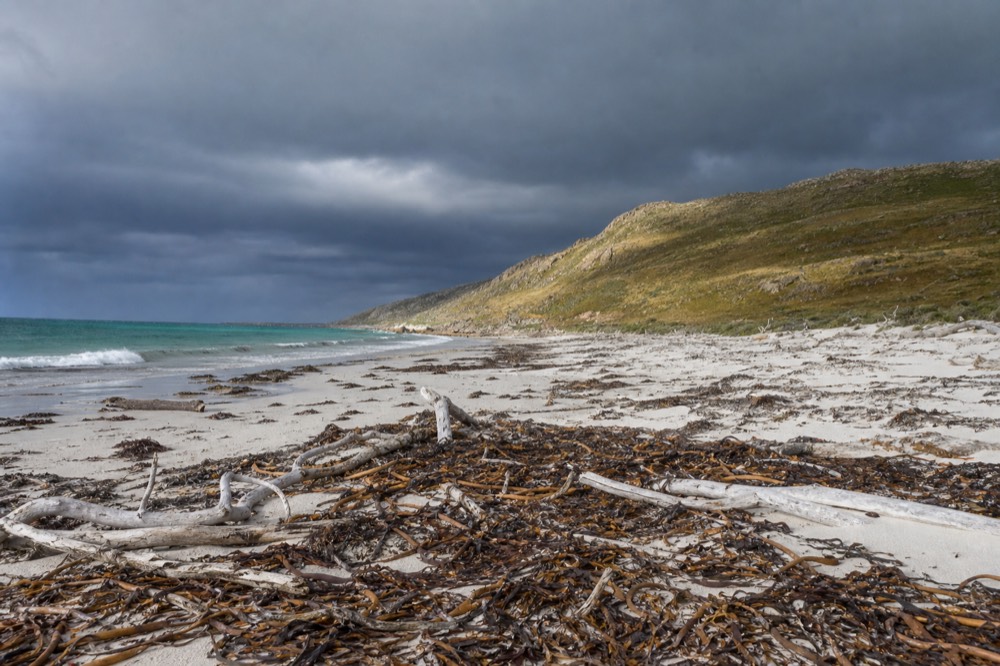
That is the whole safety story in two sentences, and both halves matter. The fenced minefields that shaped movement around Stanley and the isthmus for nearly forty years are gone, which is why beaches like Yorke Bay came back into use. The residual risk is different in kind: old ordnance moving with the sea and the peat, turning up on a beach after a storm. The rule is simple and absolute. Do not pick it up, do not photograph it up close, mark where it is in your head, and report it.
One further rule catches visitors who do not expect it. Mount Pleasant is a working military airfield, and unauthorised photography there is an offence under the Official Secrets Act. If you fly in on the airbridge or the LATAM service, cameras stay down until you are clear of the site. The UK government's Falkland Islands travel advice states both the ordnance rule and the photography rule, and the clearance programme's completion is documented in the government's own landmine-free announcement.
| Situation | The rule | What to do |
|---|---|---|
| Metal object on a beach or in peat | 1982 ordnance still washes up occasionally | Do not touch or move it, note the position, call 999 |
| Mount Pleasant airfield | Unauthorised photography is an Official Secrets Act offence | Cameras and phones away until clear of the site |
| The Argentine cemetery at Fish Creek | It is a maintained war cemetery | Stay on the paths, keep voices low, yield the site to visiting families |
| Camp tracks and gates | The ground is worked farmland with stock on it | Leave gates as you found them, stay with your guide's route |
| Weather on exposed ground | Wind and rain change inside an hour | More layers than the forecast suggests, waterproof outer |
When Are The Commemorations, And Is Liberation Day A Good Time To Visit?
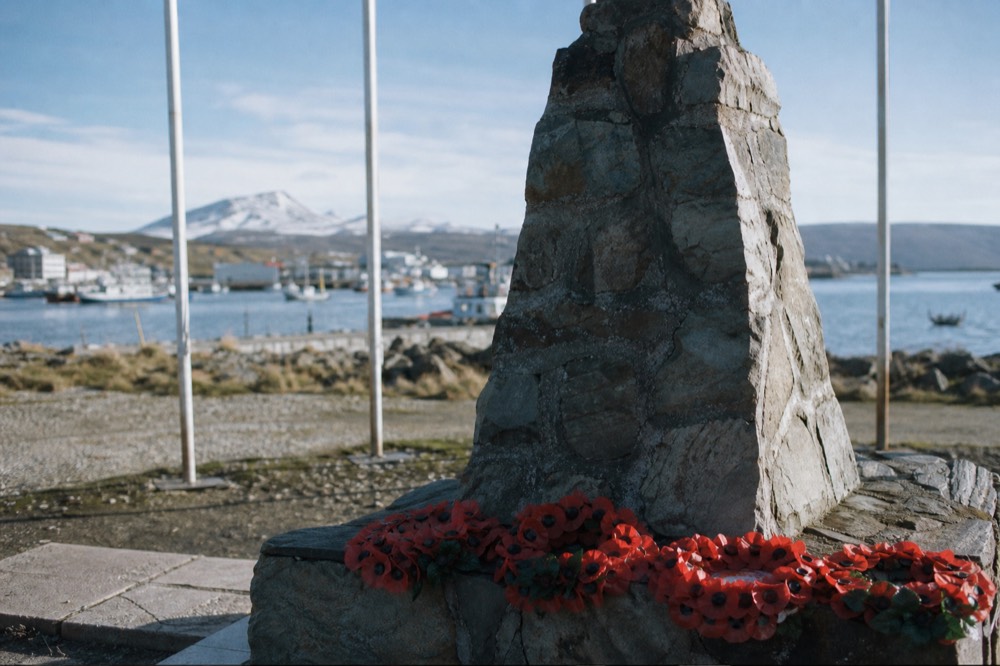
Liberation Day, 14 June, is the annual public holiday marking the end of the 1982 occupation. Stanley holds a thanksgiving service at Christ Church Cathedral, wreath-laying at the Liberation Memorial and a military parade. In 2026 it falls on a Sunday, with observance moving to Monday 15 June in some contexts. The 43rd anniversary was marked in 2025.
June is deep winter in the South Atlantic and sits well outside the cruise season, which runs from November through March or April with an October shoulder. That means almost nobody arriving by ship will ever see Liberation Day. Land-based visitors who want to be there for it are choosing short days, cold weather and a town at its least touristed, in exchange for the one occasion in the year when the islands commemorate 1982 collectively rather than privately.
There is no larger anniversary programme scheduled in the near term. The 40th anniversary fell in 2022 and carried the weight; nothing comparable is documented for 2025 or 2026 beyond the annual Liberation Day. Do not confuse Battle Day on 8 December with any of it: that commemorates the naval battle of 1914, not the 1982 conflict, a distinction locals make without thinking and visitors regularly get wrong.
| Date | What it marks | What happens |
|---|---|---|
| 14 June, annually | Liberation Day, the end of the 1982 occupation | Public holiday; cathedral thanksgiving service, wreath-laying at the Liberation Memorial, military parade |
| 14 June 2026 | Falls on a Sunday | Observance moves to Monday 15 June in some contexts |
| 8 December, annually | Battle Day | Commemorates the naval battle of 1914, not 1982 |
| 2022 | 40th anniversary of the conflict | The major commemorative year; nothing comparable scheduled since |
| Nov to Mar/Apr | Cruise season, with an October shoulder | The months when battlefield tours actually run for ship passengers |
Who Should Skip The Battlefield Day, And What To Book Instead
Skip it if your ship gives you under six hours ashore, if long gravel drives are hard on your back, or if what you actually came for is penguins. The isthmus is a two-hour proposition each way and the reward is contemplative rather than scenic. Every alternative below is a shorter, cheaper or more wildlife-focused use of the same hours.
The honest description of this day is that it is quiet, windy and slow, and that people who care about 1982 find it moving in a way no other stop in the islands matches. People who do not care about 1982 find it a long drive to look at grass. Both reactions are common and neither is wrong. Decide which one you are before you book, because the tour is not designed to convert anybody.
If the answer is penguins, the ladder is wide. An hour with gentoos runs from $40 per person, the shared penguins and Stanley sightseeing runs 2h40m from $139 per person with a maximum of 15 and a Badge of Excellence, and the full king penguin day at Volunteer Point runs 6h20m from $398 per person with a colony of more than 1,000 breeding pairs at the end of it. That last one has its own warning on the listing about back problems and pregnancy, because the final stretch is off-road across open camp.
Private transport gives your group its own vehicle, but the current Bertha’s Beach & Beyond and Penguin Paradise listings use per-person pricing that varies with party size. Compare the final total for everyone on your date; a headline price is not a flat vehicle quote. For two couples, compare the provider’s total for all four travelers with four shared tickets, allowing for differences in route and inclusions. The private day's availability and current per-vehicle price shift with the season.
| If your reason for the day is | Book | Price | Runs |
|---|---|---|---|
| The 1982 ground itself | Goose Green Battlefield & Argentine Cemetery | from $252 per person | up to 5h |
| History plus the town in a short window | Shared Penguins & Stanley Sightseeing | from $139 per person | 2h40m |
| The cheapest wildlife hour on the island | One-Hour Gentoo Colony Express | from $40 per person | 1h |
| King penguins and a full day | Volunteer Point King Penguin Day | from $398 per person | 6h20m |
| Your own vehicle, your own pace | Private Penguin Paradise | Current whole-party quote | 5h |
| A private day with a naturalist | Private Guided Eco Nature Tour | from $419.92 per person | 5-6h |
Costs across the whole trip, flights included, are broken down in what a Falklands trip really costs, and the routes in and out are set out in the LATAM service and the UK airbridge. If you want to weigh the history day against the wildlife days directly, compare the bookable options side by side on the tour lineup, or read the battle people ask about most first. Species and sites are matched up in the penguin tours compared properly.
Frequently Asked Questions
Can you visit the Argentine cemetery in the Falkland Islands?
Yes. The Argentine Military Cemetery at Fish Creek near Darwin on East Falkland is a maintained war cemetery holding 236 graves, and it is a standard stop on battlefield tours from Stanley. Visitors are expected to behave as they would at any war grave: stay on the paths, keep quiet, and give visiting families space and privacy.
How long does the Goose Green battlefield tour take?
Up to five hours, with pickup in Stanley. The day covers Darwin, the Goose Green battlefield and the Argentine Military Cemetery, priced from $252 per person, with free cancellation up to 24 hours before. Much of that time is driving on gravel and camp tracks, so cruise passengers need at least six hours ashore to attempt it safely.
Are the Falkland Islands still mined?
No. The islands were declared landmine-free after the UK-funded clearance programme completed in 2020, with the last mine found on 10 October 2020 and more than 20,000 mines destroyed in total. Ordnance from 1982 does still wash up occasionally on beaches. Never touch or move anything you find, and call 999 to report it.
What tours of the Falkland Islands cover the 1982 war sites?
One bookable day from Stanley covers Darwin, Goose Green and the Argentine Military Cemetery, run by Premium Penguin Tours from $252 per person over up to five hours. A separate private 1982 War Memorials day includes San Carlos in 5–6 hours. Mount Tumbledown is not established as a stop on either of these listings. The Historic Dockyard Museum in Stanley provides the wider historical context on foot.
When is Liberation Day in the Falkland Islands?
Liberation Day falls on 14 June each year, marking the end of the 1982 occupation. Stanley holds a thanksgiving service at Christ Church Cathedral, wreath-laying at the Liberation Memorial and a military parade. In 2026 the date lands on a Sunday, with observance moving to Monday 15 June in some contexts. It sits outside the November to March cruise season.
Is Mount Tumbledown open to visitors?
Yes. The Mount Tumbledown memorial near Stanley is open at all times, all year round, and marks one of the final engagements of the campaign on 13 and 14 June 1982. It is high, rocky and exposed, so proper footwear and windproof layers matter even though the drive from town is short. Some multi-day battlefield itineraries include it.
Your Next Step
Choose Your Falklands Outing
Initial suggestion; use the optional controls to compare your plans.
Match The Outing To Your Plans
These controls compare the listed itineraries, not personal fitness or guaranteed departure availability. Confirm child ages, access needs and ship return arrangements before paying.
Private 1982 War Memorials Tour: Fitzroy, Goose Green, Darwin cemetery and Blue Beach at San Carlos, with lunch. 5–6 hours; private.
Goose Green & Argentine Cemetery: A five-hour 4x4 history day covering Goose Green and the Argentine Cemetery. 5 hours; shared.
Penguins & Stanley Sightseeing: Yorke Bay, Gypsy Cove and Stanley landmarks with a local guide. 2h 40m; shared.
One-Hour Gentoo Colony Tour: Off-road transport to Yorke Bay gentoos in a short outing. 1 hour; shared.
Compare Your Actual Quotes
Use the same currency and comparable inclusions. A private vehicle is not automatically sold at a flat vehicle price; copy the final total for your party from the provider.
No listed outing matches these choices. Adjust or reset them; suitability that needs individual confirmation must be checked with the operator before booking.
Check your travel date before arranging the rest of your visit. Fitzroy, Goose Green, Darwin cemetery and Blue Beach at San Carlos, with lunch.
Private 1982 War Memorials Tour · 5–6 hours
Moderate fitness and a long driving day. Confirm the route and return time for your ship call.
Choose a date to check the published schedule. Availability and final price are confirmed on Viator.